ÔRYÔKI
a
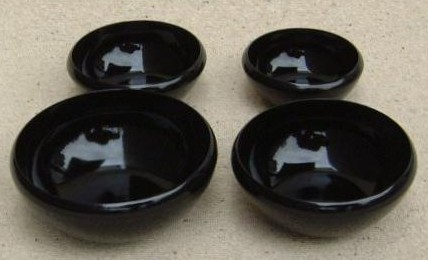
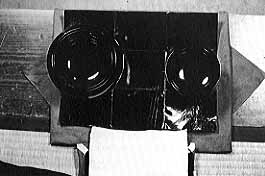
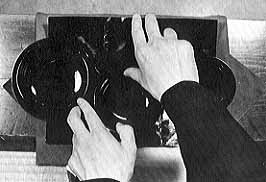
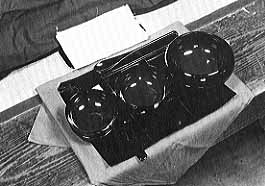
4 szótó evõcsésze
The Sôtô
4 bowls set
(ôryôki)
az
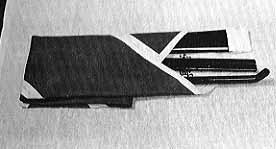
5 rinzai evõcsésze
The standard
Rinzai 5 bowls set (jihatsu)
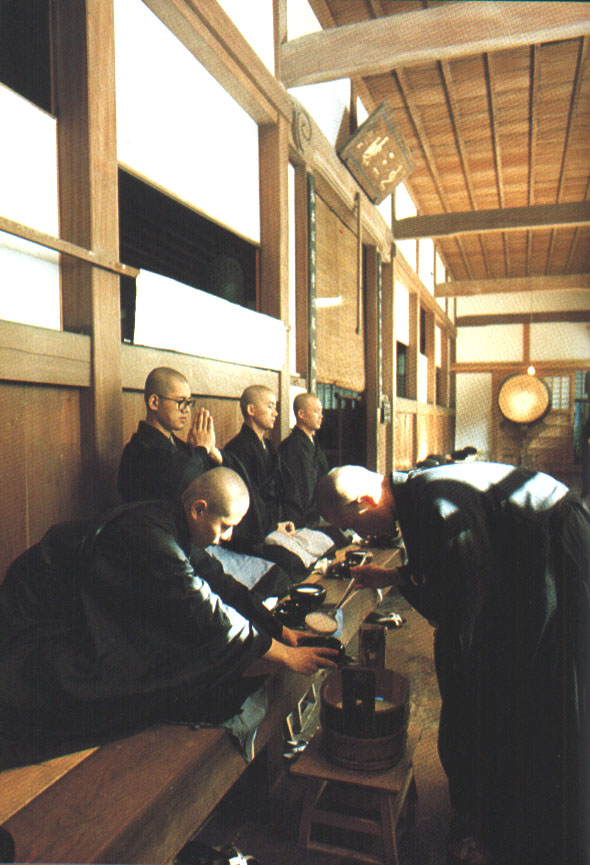
tálalás
Expressing
gratitude for the food
reggeli,
ebéd, vacsora
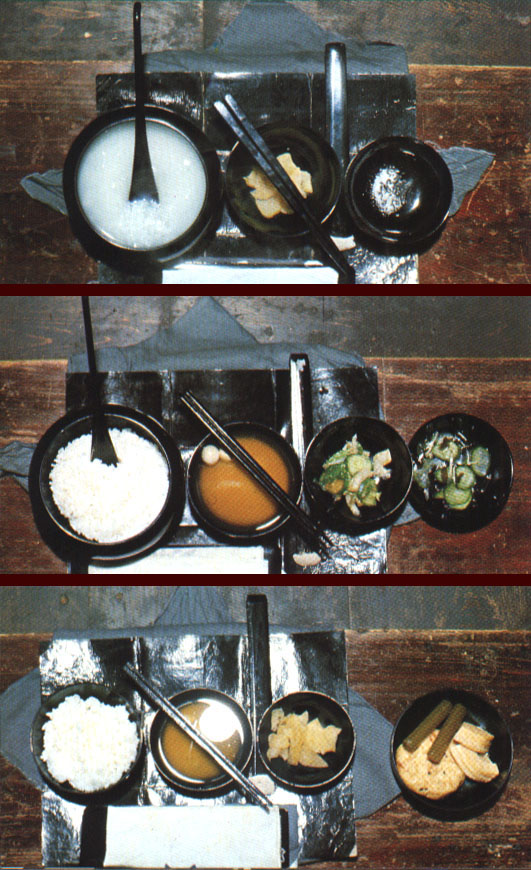
The meals
of monks in training: morning meal, noon meal, evening meal
The text was copied from the White Wind Zen Community Website at http://www.wwzc.org
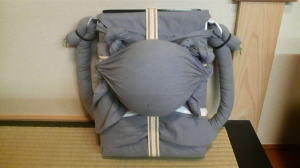
The eating bowls now in use in Zen monasteries have been used by monks in China and Japan for over one thousand years. Called "ooryooki", these bowls are part of Buddhist traditions of giving and non-attachment.
In Japanese, the word OORYOOKI is comprised of three symbols:
OO, the
receiver's response to the offering of food
RYOO, a measure, or an amount, to be received
KI, the bowl
The term OORYOOKI includes not just the food-carrying vehicle, but the practice and giving of the recipient.
In early Buddhist tradition, it was the usual practice for monks to obtain their daily food by begging. Actually, begging existed before Buddha's time,being practiced by many religious sects. However,the idea took on a larger meaning in Buddhism, where begging became an act of "offering", an exchange between monks and laymen in general.
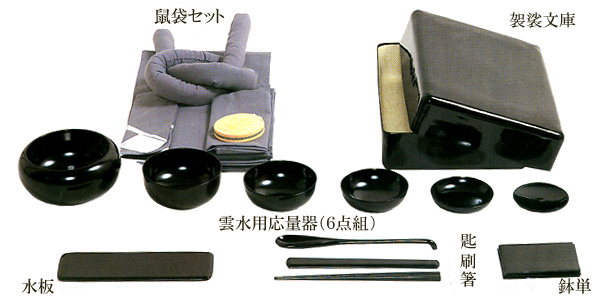
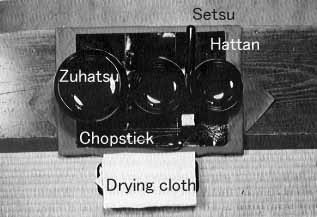
Wooden OORYOOKI bowls of today are like those developed in the monastic community of Hui Neng. The large bow is shaped like Buddha's own head, symbolizing wisdom. It is totally rounded, that is does not have a flat spot to rest on, but must be supported by a small stand when not being held. The spoon, stick, "setsu", and "hattan" were also developed in Chinese Zen Monasteries.
Since Hui-Neng, all monks receive a robe and bowl from their teacher. Whether we are monk or layman, when we use OORYOOKI we are sharing equally in the truth transmitted from Buddha to each of us
Buddhist tradition has emphasized the monk's robe and bowl as symbolic of the two things most necessary to sustain life: with one, we are supported externally (clothes, shelter), with the other ,internally (food). In early Buddhism, transmission of the robe and bowl was an important aspect of maintaining the line of patriarchal succession. In this regard, the items were symbolic of Buddha and by using them, the patriarch was emphasizing Buddha's uninterrupted existence.
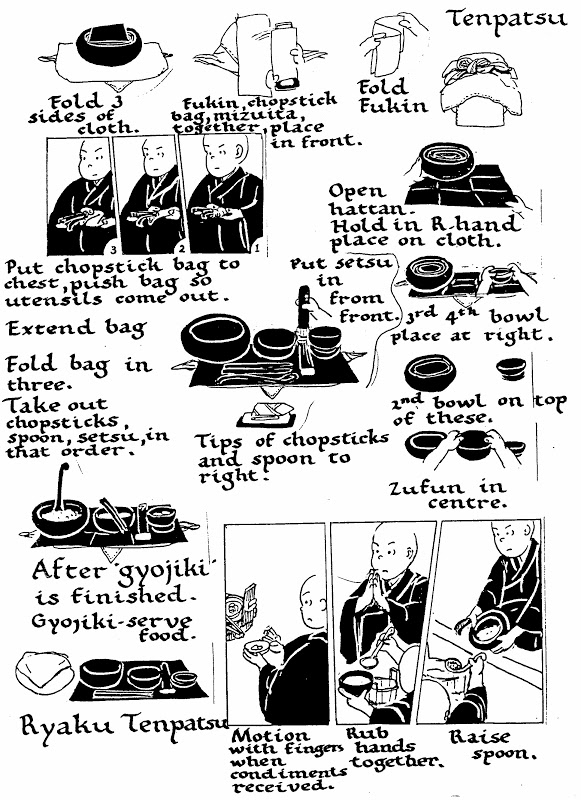
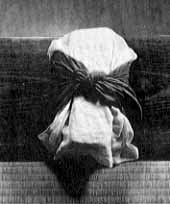
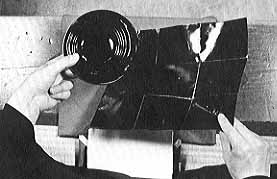
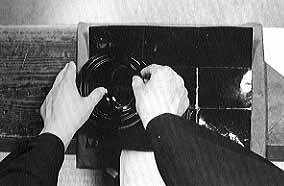
The present day OORYOOKI used by Zen monks consists of following items:
|
![]() |
In a monastery, where students have assigned cushions, it is customary to keep ooryooki on the "kanki", chest in the Sodo. Washing is done on the "off "day (days with a 4 and 9). On these days, monks are given time to attend to personal items, such as laundry, shaving, etc.
Replace setsu tip when it becomes very soiled. In the monasteries, it is the usual practice to replace the tip before sesshin.
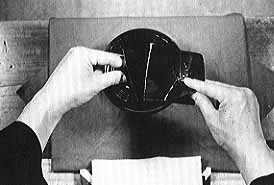
1.
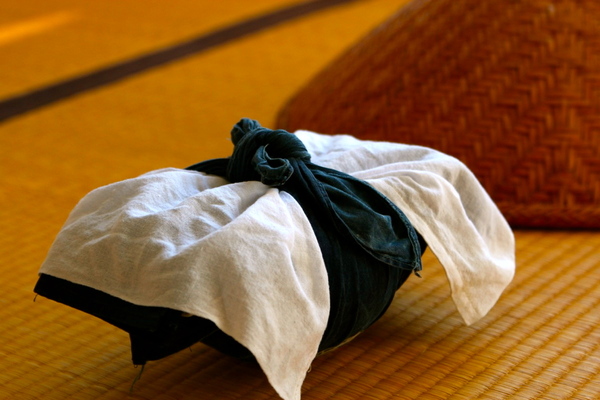
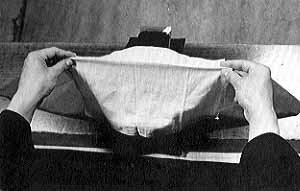
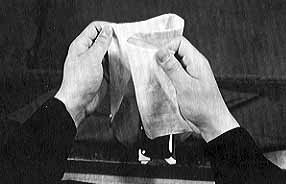
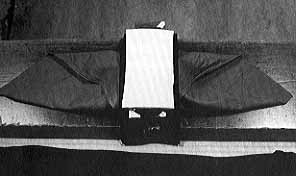
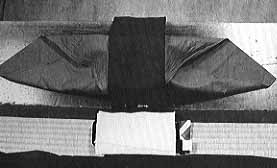
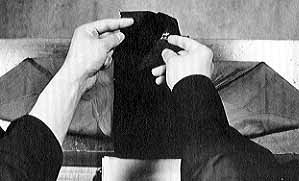
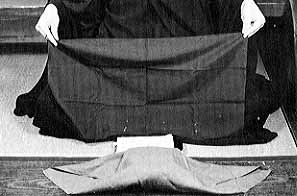
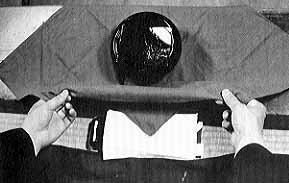
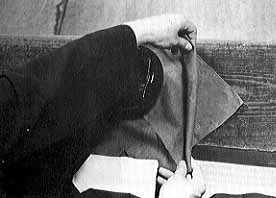
Place ooryooki directly in front of you with the tied corners of the folding
cloth pointing toward your right.
|
![]() |
4. Drying Cloth
|
![]() |
![]() |
|
|
![]() |
5. Utensil Holder and Water Board
|
![]() |
6. Napkin
|
![]() |
![]() |
|
7. Folding cloth
|
![]() |
![]() |
|
8. Hattan
|
![]() |
![]() |
|
9. Bowls
|
![]() |
![]() |
|
![]() |
|
![]() |
|
10. Utensils
|
![]() |
Zen Meal Sutras
The Buddha, born
at Kapilavastu,
Attained the way at Magadha, preached at Varanasi,
Entered Nirvana at Kusinagara.
Now as we spread the bowls of Buddha Tathagatha
We make our vows together with all beings.
We and this food and our eating are empty.
Nyan ni san
bo
An su in shi
Nyan pin dai shu nyan
Vairochana, pure
and clear Dharmakaya Buddha;
Lochana, full and complete Sambogakaya Buddha;
Shakyamuni, infinitely varied Nirmanakaya Buddha;
Maitreya, Buddha still to be born;
All Buddhas everywhere, past, present, future;
Mahayana, lotus of the subtle law;
Manjusri, great wisdom Bodhisattva;
Samantabhadra, Mahayana Bodhisattva;
Avalokitesvara, Great compassion Bodhisattva;
All venerated Bodhisattvas, Mahasattvas,
The great Prajna Paramita.
Porridge is effective
in ten ways
To aid the student of Zen.
No limit to the good result,
Consummating eternal happiness.
...
These three virtues
and six flavours
Are offered to the Buddha and Sangha
May all beings of the universe
Share alike this nourishment.
...
First, we consider
in detail the merit of this food and remember how it came to us;
Second, we evaluate our own virtue and practice, lacking or complete, as we
receive this offering;
Third, we are careful about greed, hatred and ignorance, to guard our minds
and to free ourselves from error;
Fourth, we take this good medicine to save our bodies from emaciation;
Fifth, we accept this food to achieve the Way of the Buddha.
...
Oh, all you demons
and spirits,
We now offer this food to you.
May all of you everywhere
Share it with us together.
...
The first portion
is for the Three Treasures,
The second is for the Four Blessings;
The third is for the Six Paths;
Together with all we take this food.
The first taste
is to cut off all evil,
The second is to practice all good,
The third is to save all beings;
May we all attain the Way of the Buddha.
...
We wash our bowls
in this water,
It has the flavour of ambrosial dew.
We offer it to all demons and spirits;
May all be filled and satisfied.
OM MAKULASAI SVAHA
...
The world is like
an empty sky,
The lotus does not adhere to water.
Our minds, surpassing that in purity,
We bow in veneratlon to thee most Exalted One.
by
Eihei Dogen zenji
translated by Yasuda Joshu roshi
and Anzan Hoshin sensei
(published in Cooking Zen, Great Matter Publications, 1996)
From
ancient times communities of the practice of the Way of Awake Awareness have
had six office holders who, as disciples of the Buddha, guide the activities
of Awakening the community. Amongst these, the tenzo bears the responsibility
of caring for the community's meals. The Zen Monastic Standards states, "The
tenzo functions as the one who makes offerings with reverence to the monks."
Since ancient times this office has been held by realized monks who have the
mind of the Way or by senior disciples who have roused the Way-seeking mind.
This work requires exerting the Way. Those entrusted with this work but who
lack the Way-seeking mind will only cause and endure hardship despite all their
efforts. The Zen Monastic Standards states, "Putting the mind of the Way
to work, serve carefully varied meals appropriate to each occasion and thus
offer everyone to practice without hindrance."
In times past such great masters as Guishan Lingyu, Dongshan Shouchu, and others
have served in this post. Although this is a matter of preparing and serving
meals, the tenzo is not just "the cook."
When I was in Song China, during spare moments I enquired of many elder monks
who had served in the various offices about their experience. Their words to
me were from the bone and marrow of the Awakened Ancestors who, having attained
the Way, have passed it through the ages. We should carefully study the Zen
Monastic Standards to understand the responsibility of the tenzo and also carefully
consider the words of these senior monks.
The cycle of one day and night begins following the noon meal. At this time
the tenzo should go to the administrator and assistant administrator and procure
the rice, vegetables, and other ingredients for the next day's morning and noon
meals. Having received these things, you must care for them as you would the
pupils of your own eyes. Thus Zen master Baoning Renyong said, "Care for
the monastery's materials as if they were your eyes." The tenzo handles
all food with respect, as if it were for the emperor; both cooked and uncooked
food should be cared for in this way.
Following this all of the officers gather in the kitchen building in order to
carefully consider the next days meals with regard to flavourings, vegetables
to be used, and the kind of rice-gruel. The Zen Monastic Standards states, "In
deciding the morning and noon meals, the amount of food and number of dishes,
the tenzo should consult the other officers. The six officers are the administrator,
assistant administrator, treasurer, disciplinarian, tenzo, and head caretaker.
After the menu is decided post it on boards by the abbot's residence and
the study hall." Following this the morning gruel may be prepared.
Do not just leave washing the rice or preparing the vegetables to others but
use your own hands, your own eyes, your own sincerity. Do not fragment your
attention but see what each moment calls for; if you take care of just one thing
then you will be careless of the other. Do not miss the opportunity of offering
even a single drop into the ocean of merit or a grain atop the mountain of the
roots of beneficial activity.
The Zen Monastic Standards states, "If the six flavours are not in
harmony and three virtues are lacking, then the tenzo is not truly serving
the community."
Be careful of sand when you wash the rice, be careful of the rice when you throw
out the sand. Take continuous care and the three virtues will be naturally complete
and the six flavours harmonious.
Xuefeng once practiced as tenzo under Zen master Dongshan. Once
when he was washing rice, Dongshan said, "Do you wash the sand away from the
rice, or the rice away from the sand?"
Xuefeng said, "I wash them both away together?"
Dongshan said, "Then what will the community eat?"
Xuefeng overturned the washing bowl.
Dongshan said, "You should go and study with someone else. Soon."
Senior students, from ancient times, always practiced with the mind which finds
the Way and so how can we of later generations not do the same? Those of old
tell us, "For the tenzo, the mind which finds the Way actualizes itself through
working with rolled up sleeves."
You yourself should examine the rice and sand so that rice is not thrown out
with sand. The Zen Monastic Standards states, "In preparing the food, the
tenzo is responsible for examining it to ensure that it is clean." Do not
waste grains of rice when draining off the rinsing water. In olden times a cloth
bag was used as a filter when draining the rinse water. When the rice is placed
in the iron cooking pot, take care of it so that rats do not fall into it or
idlers just hang around poking at it.
After cooking the vegetables for the morning meal and before preparing rice
and soup for the noon meal bring together the rice pots and other utensils and
make sure that everything is well-ordered and clean. Put whatever goes to a
high place in a high place and whatever goes to a low place in a low place so
that, high and low, everything settles in the place appropriate for it. Chopsticks
for vegetables, ladles, and all other tools should be chosen with great care,
cleaned thoroughly, and placed well.
After this, begin work on the coming day's meals. Remove any weevils, lentils,
husks, sand, and pebbles carefully. While you are selecting the rice and vegetables,
the tenzo's assistants should chant the sutras to the shining being of the hearth.
When preparing the vegetables or ingredients for the soup which have been received
from the office do not disparage the quantity or quality but instead handle
everything with great care. Do not despair or complain about the quantity of
the materials. Throughout the day and night, practice the coming and going of
things as arising in the mind, the mind turning and displaying itself as things.
Put together the ingredients for the morning meal before midnight and begin
cooking after midnight. After the morning meal, clean the rice cooking pots
and soup pots for the noon meal. The tenzo should always be present at the sink
when the rice is being soaked and the water measured. Watching with clear eyes,
ensure that not a single grain is wasted. Washing it well, place it in the pots,
make a fire, and boil it. An old teacher said, "Regard the cooking pot as
your own head, the water your own life-blood." Place the cooked rice in
bamboo baskets in summer and wooden serving buckets in winter and set these
out on trays. While the rice is boiling, cook the soup and vegetables.
The tenzo supervises this personally. This is true whether the tenzo works alone
or has assistants to tend the fire or prepare the utensils. Recently, Zen monasteries
have developed positions such as rice-cook and soup-cook who work under the
tenzo. The tenzo is always responsible for whatever is done. In olden times
the tenzo did everything without any assistance.
In preparing food never view it from the perspective of usual mind or on the
basis of feeling-tones. Taking up a blade of grass erect magnificent monasteries,
turn the Wheel of Reality within a grain of dust. If you only have wild grasses
with which to make a broth, do not disdain them. If you have ingredients for
a creamy soup do not be delighted. Where there is no attachment, there can be
no aversion. Do not be careless with poor ingredients and do not depend on fine
ingredients to do your work for you but work with everything with the same sincerity.
If you do not do so then it is like changing your behaviour according to the
status of the person you meet; this is not how a student of the Way is.
Strengthen your resolve and work whole-heartedly to surpass the monks of old
and be even more thorough than those who have come before you. Do this by trying
to make as fine a soup for a few cents as the ancients could make a coarse broth
for the same amount.
The difficulty is that present and the past are separated by a gulf as great
as between sky and earth and no one now can be compared to those of ancient
times. However, through complete practice of seeing the nature of things you
will be able to find a way. If this isn't clear to you it is because your thoughts
speed about like a wild horse and feeling-tones careen about like a monkey in
the trees. Let the monkey and horse step back and be seen clearly and the gap
is closed naturally. In this way, turn things while being turned by them. Clarify
and harmonize your life without losing the single Eye which sees the context
or the two eyes which recognize the details.
Taking up a vegetable leaf manifests the Buddha's sixteen-foot golden body;
take up the sixteen-foot golden body and display it as a vegetable leaf. This
is the power of functioning freely as the awakening activity which benefits
all beings.
Having prepared the food, put everything where it belongs. Do not miss any detail.
When the drum sounds or the bells are struck, follow the assembly for morning
zazen and in the evening go to the master's quarters to receive teachings. When
you return to the kitchen, count the number of monks present in the Monks' Hall;
try closing your eyes. Don't forget about the senior monks and retired elders
in their own quarters or those who are sick. Take into account any new arrivals
in the entry hall or anyone who is on leave. Don't forget anyone. If you have
any questions consult the officers, the heads of the various halls, or the head
monk.
When this is done, calculate just how much food to prepare: for each grain of
rice needed, supply one grain. One portion can be divided into two halves, or
into thirds or fourths. If two people tend to each want a half-serving, then
count this as the quantity for a single full serving. You must know the difference
that adding or subtracting one serving would make to the whole.
If the assembly eats one grain of rice from Luling, the tenzo is the monk Guishan.
In serving a grain of that rice, the tenzo sees the assembly become the ox.
The ox swallows Guishan. Guishan herds the ox.
Are your measurements right or are they off? Have those you consulted been correct
in their counting? Review this as best as you can and then direct the kitchen
accordingly. This practice of effort after effort, day after day, should not
be forgotten.
When a patron visits the monastery and makes a donation for the noon meal, discuss
this with the other officers. This is the tradition of Zen monasteries. Other
offerings to be distributed should also be discussed with the other officers.
In this way, the responsibilities of others are not disrupted nor your own neglected.
When the meal is ready and set out on trays, at noon and morning put on the
wrap robe, spread your bowing mat, offer incense and do nine great bows in the
direction of the Monks' Hall. When this is done, send out the food.
Day and night, the work for preparing the meals must be done without wasting
a moment. If you do this and everything that you do whole-heartedly, this nourishes
the seeds of Awakening and brings ease and joy to the practice of the community.
Although the Buddha's Teachings have been heard for a long time in Japan, I
have never heard of any one speaking or writing about how food should be prepared
within the monastic community as an expression of the Teachings, let alone such
details as offering nine bows before sending forth the food. As a consequence,
we Japanese have taken no more consideration of how food should be prepared
in a monastic context than have birds or animals. This is cause for regret,
especially since there is no reason for this to be so.
When I was staying at Tiantong-jingde-si, a monk named Lu from Qingyuan fu held
the post of tenzo. Once, following the noon meal I was walking along the eastern
covered walkway towards a sub-temple called Chaoran Hut when I came upon him
in front of the Buddha Hall drying mushrooms in the sun. He had a bamboo stick
in his hand and no hat covering his head. The heat of the sun was blazing on
the paving stones. It looked very painful; his back was bent like a bow and
his eyebrows were as white as the feathers of a crane. I went up to the tenzo
and asked, "How long have you been a monk?"
"Sixty-eight years," he said.
"Why don't you have an assistant do this for you?"
"Other people are not me."
"Venerable sir, I can see how you follow the Way through your work. But still,
why do this now when the sun is so hot?"
"If not now, when?"
There was nothing else to say. As I continued on my way along the eastern corridor
I was moved by how important the work of the tenzo is.
In May of 1223 I was staying aboard the ship at Qingyuan. Once I was speaking
with the captain when a monk about sixty years of age came aboard to buy mushrooms
from the ships Japanese merchants. I asked him to have tea with me and asked
where he was from. He was the tenzo from Ayuwang shan.
He said, "I come from Xishu but it is now forty years since I've left there
and I am now sixty-one. I have practiced in several monasteries. When the Venerable
Daoquan became abbot at Guyun temple of Ayuwang I went there but just idled
the time away, not knowing what I was doing. Fortunately, I was appointed tenzo
last year when the summer Training Period ended. Tomorrow is May 5th but I don't
have anything special offerings for the monks so I thought I'd make a nice noodle
soup for them. We didn't have any mushrooms so I came here to give the monks
something from the ten directions."
"When did you leave Ayuwangshan?" I asked.
"After the noon meal."
"How far is it from here?"
"Around twelve miles."
"When are you going back to the monastery?'
"As soon as I've bought the mushrooms."
I said, "As we have had the unexpected opportunity to meet and talk like this
today, I would like you to stay a while longer and allow me to offer Zen master
tenzo a meal."
"Oh, I'm sorry, but I just can't. If I am not there to prepare tomorrow's meal
it won't go well."
"But surely someone else in the monastery knows how to cook? If you're not there
it can't make that much difference to everyone."
"I have been given this responsibility in my old age and it is this old man's
practice. How can I leave to others what I should do myself? As well, when I
left I didn't ask for permission to be gone overnight."
"Venerable sir, why put yourself to the difficulty of working as a cook in your
old age? Why not just do zazen and study the koan of the ancient masters?"
The tenzo laughed for a long time and then he said, "My foreign friend, it seems
you don't really understand practice or the words of the ancients."
Hearing this elder monk's words I felt ashamed and surprised. I asked, "What
is practice? What are words?"
The tenzo said, "Keep asking and penetrate this question and then you will be
someone who understands."
But I didn't know what he was talking about and so the tenzo said, "If you don't
understand then come and see me at Ayuwang shan some time. We'll talk about
the meaning of words." Having said this, he stood up and said, "It'll be getting
dark soon. I'd best hurry." And he left.
In July of the same year I was staying at Tiantong shan when the tenzo of Ayuwang
shan came to see me and said, "After the summer Training Period is over I'm
going to retire as tenzo and go back to my native region. I heard from a fellow
monk that you were here and so I came to see how you were making out."
I was overjoyed. I served him tea as we sat down to talk. When I brought up
our discussion on the ship about words and practice, the tenzo said, "If you
want to understand words you must look into what words are. If you want to practice,
you must understand what practice is."
I asked, "What are words?"
The tenzo said, "One, two, three, four, five."
I asked again, "What is practice?"
"Everywhere, nothing is hidden."
We talked about many other things but I won't go into that now. Suffice it to
say that without this tenzo's kind help I would not have had any understanding
of words or of practice. When I told my late teacher Myozen about this he was
very pleased.
Later I found a verse that Xuedou wrote for a disciple:
"One, seven, three, five.
What you search for cannot be grasped.
As the night deepens,
the moon brightens over the ocean.
The black dragon's jewel
is found in every wave.
Looking for the moon,
it is here in this wave
and the next."
What the tenzo said is expressed here in Xuedou's verse as well. Then it was
even clearer to me that the tenzo was truly a person of the Way.
Before I knew one, two three, four, five; now I know six, seven, eight, nine,
ten. Monks, you and those to follow must understand practice and words through
this and from that. Exert yourself in this way and you will practice the single
true taste of Zen beyond words, undivided into the poisonous five flavours.
Then you will be able to prepare food for the monastic community properly.
There are many old stories we can hear and present examples of monks training
as tenzo. A great many teachings concern this because it is the heart of the
Way.
Even if you become the Abbot of a monastery, you should have this same understanding.
The Zen Monastic Standards states, "Prepare each meal with each detail kept
clear so that there will be enough. Make sure that the four offerings of food,
clothing, bedding, and medicine are adequate just as the Generous One
offered to his disciples the merit of twenty years of his lifetime. We ourselves
live today within the light of that gift because the energy of even a white
hair between his brows is inexhaustible." It also says, "Just
think about how to best serve the assembly without being hindered by thoughts
of poverty. If your mind is limitless, you enjoy limitlessness." This is
how the abbot serves the assembly.
In preparing food, it is essential to be sincere and to respect each ingredient
irregardless of how coarse or fine it is. There is the example of the old woman
who gained great merit through offering water in which she had rinsed rice to
the Thus Come. And of King Ashoka creating roots of wholesomeness through offering
half a mango to a monastery as he lay dying. As a result of this he realized
the deathless in his next life. Even the grandest offering to the Buddha, if
insincere, is worth less than the smallest sincere offering in bringing about
a connection with awakening. This is how human beings should conduct themselves.
A rich buttery soup is not better as such than a broth of wild herbs. In handling
and preparing wild herbs, do so as you would the ingredients for a rich feast,
wholeheartedly, sincerely, clearly. When you serve the monastic assembly, they
and you should taste only the flavour of the Ocean of Reality, the Ocean of
unobscured Awake Awareness, not whether or not the soup is creamy or made only
of wild herbs. In nourishing the seeds of living in the Way rich food and wild
grass are not separate. There is the old saying, "The mouth of a monk is
like a furnace." Bear this in mind. Wild grasses can nourish the seeds of
Buddha and bring forth the buds of the Way. Do not regard them lightly. A teacher
must be able to use a blade of wild grass to benefit humans and shining beings.
Do not discriminate between the faults or virtues of the monks or whether they
are senior or junior. You do not even know where you stand, so how can you put
others into categories. Judging others from within the boundaries of your own
opinions, how could you be anything other than wrong? Although there are differences
between seniors and juniors, all are equally members of the assembly. Those
who had many faults yesterday may be correct and clear today. Who can judge
"sacred" from "common." The Zen Monastic Standards states, "Whether foolish
or wise, the fact that one trains as a monk provides for others a gift that
penetrates everywhere."
If you stand beyond opinions of right and wrong, you bring forth the practice
of actualizing unsurpassable Awakening. If you do not, you take a wrong step
and miss what's there. The bones and marrow of the ancients was just the exertion
of such practice and those monks who train as tenzo in the future realize the
bones and marrow of the Way only through just such exertion. The monastic rules
set forth by great master Baizhang must always be maintained.
After I returned to Japan I stayed at Kennin-ji for around two years. They had
the office of tenzo there but it was only nominal because no one actually carried
out the real activity of this training post. They did not understand it as the
activity of Awake Awareness so how could they have been able to use it to express
the Way? Truly, it was very sad. The tenzo there had never encountered a living
one who could use the office of tenzo as the functioning of Awake Awareness
and so he carelessly idled away, breaking the standards of practice.
I watched the tenzo there quite closely. He never actually worked at preparing
the morning and evening meals but just ordered about some rough servants, lacking
in intelligence and heart, leaving to them all the tasks whether important or
not. He never checked on whether they were working well or not, as if it would
be shameful to do so like peeping into the private quarters of a neighbouring
woman. He just hung about in his own rooms, reading sutras or chanting when
he wasn't lying down or chatting. Months would go by before he would even come
close to a pot, let alone buy utensils or make out a menu. He did not understand
that these activities are the exertion of Awareness. The practice of donning
the wrap robe and offering nine bows before sending out the food was something
he would never have even dreamed of; it just wouldn't have occurred to him.
As he himself did not understand the office of tenzo, when it came time for
him to teach a novice how to carry out the office what understanding could be
passed on? It was very regrettable. Although one might have the fortune to hold
this post, if one is without the mind which uncovers the Way and fails to meet
with one who has the virtue of the Way, it is like returning empty-handed after
climbing a mountain of treasure or entering an ocean of jewels.
Although you might not have the mind which uncovers the Way, if you meet one
manifesting the True Person you can then practice and unfold the Way. Or, even
if you cannot meet with one who is the display of the True Person, by yourself
deeply arousing the seeking for the Way, you can begin the Way. If you lack
both of these, what is the point?
In the many monasteries of the mountains of Song China that I have seen, the
monks holding the various offices train in these posts for a year at a time,
each of them in each moment practicing by three standards. Firstly, to benefit
others benefits yourself. Second, make every effort to maintain and renew the
monastic environment. Third, follow the standards set forth by the examples
of excellent practitioners of past and present and come to stand with them.
You should understand that foolish people hold their practice as if it belonged
to someone else, wise people practice with everyone as themselves.
An ancient teacher said,
"Two-thirds of your life has passed
without clarifying who you are.
Eating your life,
muddling about in this and that,
you don't even turn when called on.
Pathetic."
From this verse we can see that if you have not met a true teacher, you will
just follow the lead of your tendencies. And this is pathetic. It's like the
story of the foolish son who leaves his parent's home with the family treasure
and then throws it away on a dung heap. Do not waste your opportunity as that
man did.
Considering those who in the past made good use of their training as tenzo,
we can see that their virtues were equal to those of their office. The great
Daigu woke up while training as tenzo and Dongshan Shouchou's "Three pounds
of flax," occurred while he was tenzo. The only thing of value is the realization
of the Way, the only time that is precious is each moment of realizing the Way.
Examples of those who long for the Way are many. There is the story of a child
offering the Buddha a handful of sand as a great treasure. Another is of someone
who made images of the Buddha and had reverence for them and thus had great
benefit follow them. How much more benefit must there be in fulfilling the office
of tenzo through actualizing its possibilities as have those excellent ones
who have practiced before us?
When we train in any of the offices of the monastery we should do so with a
joyful heart, a motherly heart, a vast heart. A "joyful heart" rejoices and
recognizes meaning. You should consider that were you to be born in the realm
of the shining beings you would be absorbed in indulgence with the qualities
of that realm so that you would not rouse the recognition of uncovering the
Way and so have no opportunity to practice. And so how could you use cooking
as an offering to the Three Jewels? Nothing is more excellent than the Three
Jewels of the Buddha, the Teachings, and the Community of those who practice
and realize the Way. Neither being the king of gods nor a world ruler can even
compare with the Three Jewels.
The Zen Monastic Standards states, "The monastic community is the most excellent
of all things because those who live thus live beyond the narrowness of social
fabrications." Not only do we have the fortune of being born as human beings
but also of being able to cook meals to be offered to the Three Jewels. We should
rejoice and be grateful for this.
We can also reflect on how our lives would be were we to have been born in the
realms of hell beings, hungry ghosts, animals, or jealous gods. How difficult
our lives would be in those four situations or if we had been born in any of
the eight adverse conditions. We would not then be able to practice together
with the strength of a monastic community even should it occur to us to aspire
to it, let alone be able to offer food to the Three Jewels with our own hands.
Instead our bodies and minds would be bound within the limits of those circumstances,
merely vessels of contraction.
This life we live is a life of rejoicing, this body a body of joy which can
be used to present offerings to the Three Jewels. It arises through the merits
of eons and using it thus its merit extends endlessly. I hope that you will
work and cook in this way, using this body which is the fruition of thousands
of lifetimes and births to create limitless benefit for numberless beings. To
understand this opportunity is a joyous heart because even if you had been born
a ruler of the world the merit of your actions would merely disperse like foam,
like sparks.
A "motherly heart" is a heart which maintains the Three Jewels as a parent cares
for a child. A parent raises a child with deep love, regardless of poverty or
difficulties. Their hearts cannot be understood by another; only a parent can
understand it. A parent protects their child from heat or cold before worrying
about whether they themselves are hot or cold. This kind of care can only be
understood by those who have given rise to it and realized only by those who
practice it. This, brought to its fullest, is how you must care for water and
rice, as though they were your own children.
The Great Master Shakyamuni offered to us the final twenty years of his own
lifetime to protect us through these days of decline. What is this other than
the exertion of this "parental heart"? The Thus Come One did not do this hoping
to get something out of it but sheerly out of munificence.
"Vast heart" is like a great expanse of ocean or a towering mountain. It views
everything from the most inclusive and broadest perspective. This vast heart
does not regard a gram as too light nor five kilos as too heavy. It does not
follow the sounds of spring or try to nest in a spring garden; it does not darken
with the colours of autumn. See the changes of the seasons as all one movement,
understand light and heavy in relation to each other within a view which includes
both. When you write or study the character "vast," this is how you should understand
its meaning.
If the tenzo at Jiashan had not thus studied the word "vast," he could not have
woken up Elder Fu by laughing at him.If Zen master Guishan had not understand
the word "vast," he would not have blown on dead firewood three times. If the
monk Dongshan had not understood the word "vast," he could not have taught the
monk through his expression, "Three pounds of flax."
All of these and other great masters through the ages have studied the meaning
of "vast" or "great" not only though the word for it but through all of the
events and activities of their lives. Thus they lived as a great shout of freedom
through presenting the Great Matter, penetrating the Great Question, training
great disciples and in this way bringing it all forth to us.
The abbot, senior officers and staff, and all monks should always maintain these
three hearts or understandings.
Written
in the spring of 1237 for those of coming generations
who will practice the Way by Dogen, abbot of Kosho-(Horin-)ji.