SZÓTÓ ZEN SŌTŌ ZEN
« Zen főoldal
« vissza a Terebess Online nyitólapjára
曹洞宗 Sōtōshū: Zen Monastic Robes
(Magyar:) A szótó zen felekezet szerzetesi öltözéke
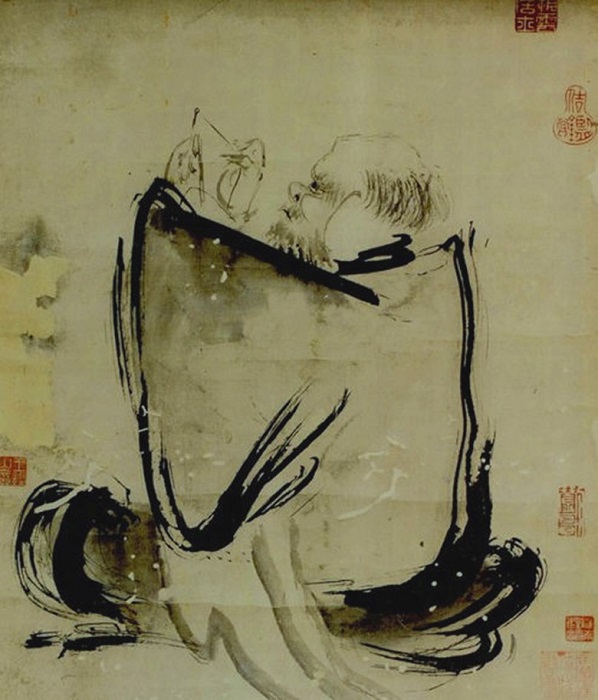
补衲图 Patching the Robe by 梁楷 Liang Kai (1140-1210)
Részletesebben a Néprajzi Múzeum Időképek című katalógusában,
Lux Éva muzeológus képaláírásaival
Kimono, juban

Fehér alsó kimono, juban (alsóing), fundoshi (ágyékkötő), himo (öv)
Ishikiate: word used for a part of kimono, a piece of square thick cloth of reinforcement for kimono, like a seat lining.
着物 kimono
Köntös
The traditional Japanese kimono has wide, half-way sewn sleeves. There is no seam between the top and the skirt, and there are no pleats in the skirt. Pure cotton kimonos lose length during washing. A fold in the waist areas allows for lengthening. Kimonos are ankle length, For ceremonial use white cotton. For everyday use grey fabric.
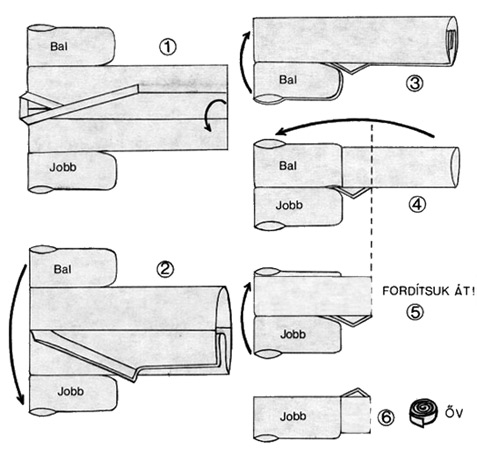
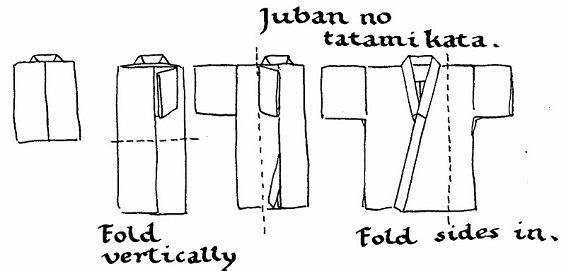
Japán módra így hajtogatjuk össze a kimonót ^
(kimono összahajtása: http://en.wikipedia.org/wiki/File:Kimonofold.jpg)
浴衣 yukata
vékony, nyári hálókabát
is an unlined kimono-like garment for summer use, usually made of cotton, linen, or hemp. Yukata are strictly informal, most often worn to outdoor festivals, by men and women of all ages. They are also worn at onsen (hot spring) resorts, where they are often provided for the guests in the resort's own pattern.
襦袢 juban
underkimono
Alsóing長襦袢 nagajuban A nagajuban is worn beneath the kimono. This is another kimono, usually shorter than the outer one, worn as underwear, complete with the long kimono sleeves, which are neatly fitted inside the outer kimono's sleeves. Silk kimono are difficult to clean and often delicate, the nagajuban (sometimes just called a juban) helps keep the outer kimono clean by keeping it off the wearer's skin. Only the collar edge of the nagajuban shows from beneath the outer kimono.
紐 himo
Öv (a kimono megkötésére)腰紐 koshi himo Thin sashes tied to keep the kimono in place while getting dressed.
帯 obi
sash, belt
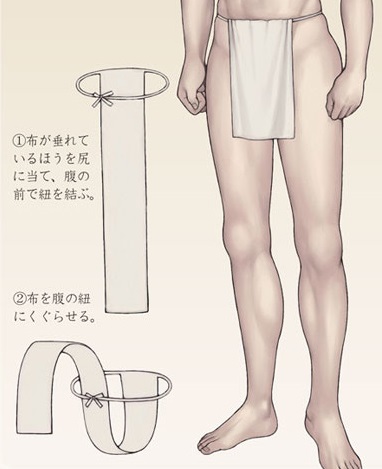
Széles kimonó öv褌 fundoshi (越中褌 etchū-fundoshi)
men's kimono underwear, wrapped thong style
Ágyékkötőés így kell alsót hajtogatni a fundoshi-ból:
襷 tasuki
cord to tie sleeves
A cord or band of cloth to tie up the wide sleeves of traditional Japanese clothing. This was done so that the tasuki went around each upper arm near the shoulders and crossed in the back. The tasuki holds the sleeves in place so they do not interfere with the task at hand. Tasuki are used during housework, labor, at festivals, in combat and during martial arts training, all of these are conditions where the sleeves could interfere with activity.
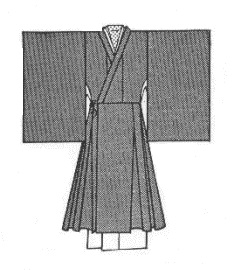
1. A general term for traditional Japanese (as opposed to Western-style) clothing. 2. A general term for any formal outer garments worn by Buddhist monks in Japan; also called dharma robes (hōe 法衣). 3. A Chinese-style robe that is worn by Buddhist monks in East Asia; also called a long robe (jikitotsu 直裰). The koromo has long sleeves and a collar and is tied by a sash or belt (obi 帶) around the waist. Zen monks in Japan wear a Japanese-style long cotton kimono (yukata 浴衣) under the koromo, with a collared white undershirt (juban 襦袢) under the kimono. The ceremonial kesa, a vestige of the upper robe that covered one shoulder of Buddhist monks in India, is worn over the koromo. Formally dressed Zen monks thus wear two layers of traditional Japanese clothing (kimono), covered by a Chinese Buddhist long robe (koromo), which is topped by an Indian Buddhist robe (kesa).

直裰 jikitotsu
long robe
Indiától Kínán át Japánig fut a szótó zen „szellemi vérvonala" — ennek emlékét három részes csuhájával a szerzetes magán viseli: alsó ruházata hagyományos japán (着物 kimono), fölötte a bő ujjas köntös kínai (衣 koromo, 直綴 jikitotsu), végül bal vállán a lepel indiai eredetű (袈裟 kesa). A belső réteg kimono a leghosszabb, bokáig ér. A külső réteg kesa a legrövidebb, a vádli közepéig ér le. A köztes réteg koromo alsó széle a kettő közé esik.
The "spiritual lineage" of Sōtō Zen extends from India through China to Japan—this legacy is carried by monks in their three-piece robe. Their inner garment is the traditional Japanese kimono (着物), over which they wear a wide-sleeved Chinese-style robe, the koromo (衣) or jikitotsu (直綴). Finally, draped over the left shoulder is the kesa (袈裟), a garment of Indian origin.
The innermost layer, the kimono, is the longest, reaching down to the ankles. The outermost layer, the kesa, is the shortest, extending to the middle of the calves. The intermediate koromo falls in between these two lengths.A style of Buddhist monk's robe that was developed in China by "sewing" (totsu 裰) "directly" (jiki 直) together the upper and lower robes that were worn by monks in India to make a single garment that (unlike the Indian model) has long sleeves, covers both shoulders, and is fastened with a sash or belt around the waist.
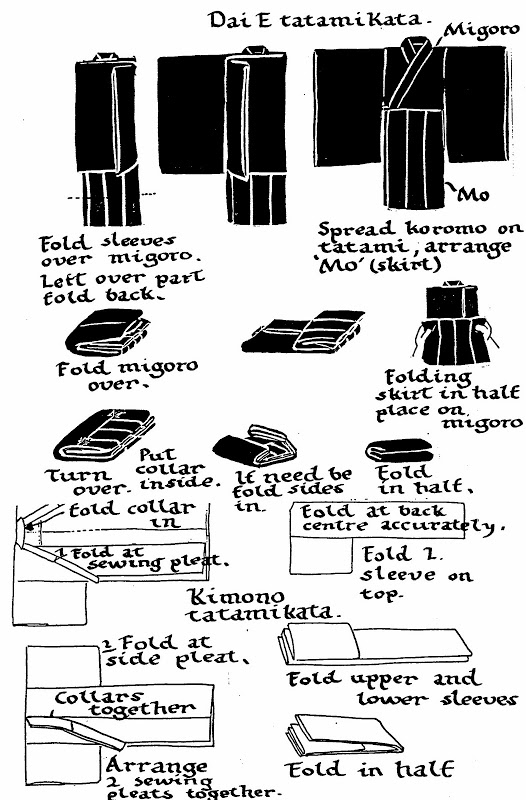
How to fold the big black robe (koromo, also called dai-e 大衣) and the kimono when you store it away:
When you are in a hurry, here is an easier way to fold the dai-e:
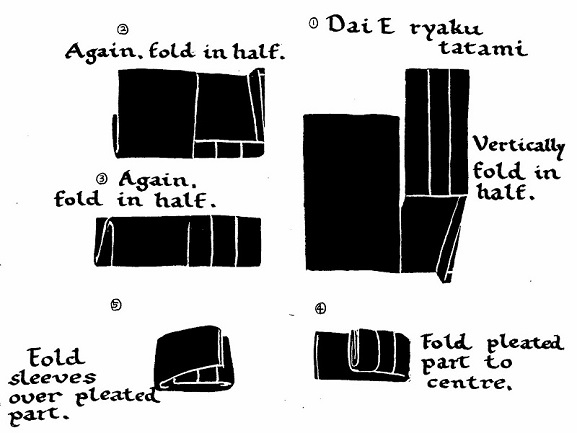
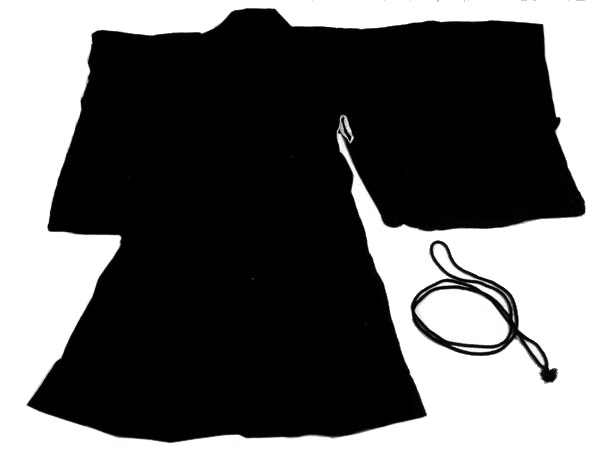
There is an "arm pit ventilation" feature.
These robes have wide sleeves and seven box pleats in the skirt. They are traditionally worn shorter than the kimono, which is seen under the robe. The Soto style has much wider sleeves than the Rinzai style; both have a hook and loop to tie the sleeves behind the neck. Monastic robes have a wider collar than lay robes and additional pleats in the center front.
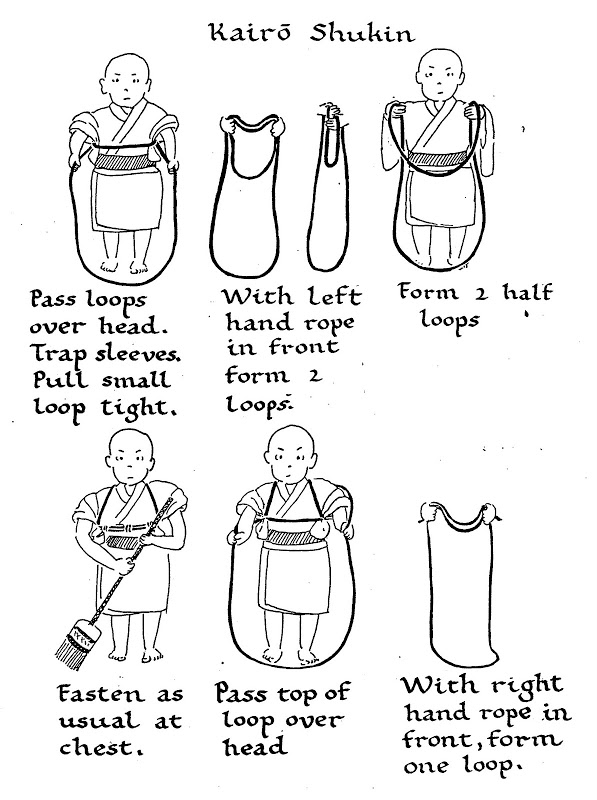
手巾 shukin
the cord that monks wear around their waist
Kötélöv (a koromo megkötésére)
A kimono és koromo hátrakötésére is jó, hogy ne zavarjon pl. mosdáskor vagy munkavégzéskor.
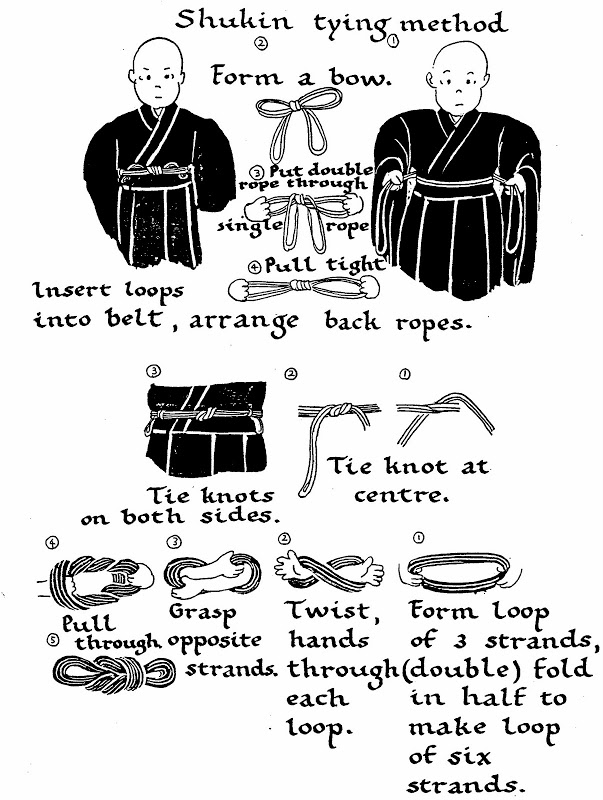
You also take part in the temple cleaning in the morning, but during this test period you do not wear your work clothes (samu-e) as would be usual, but rather tie up you kimono with the shukin-belt. This is done only during the tanga-ryô period now, but I guess they did temple work (samu) in this fashion as well, before the samu-e where invented (they are not so old, that is why they do not have them in China or Korea).
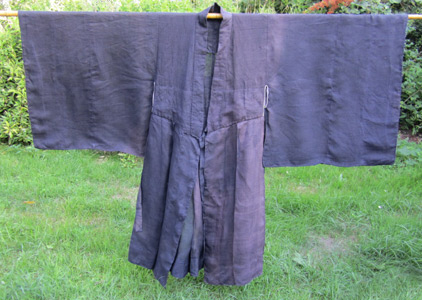
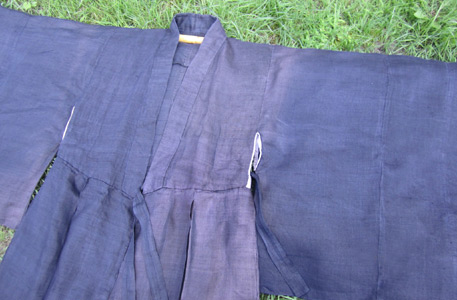
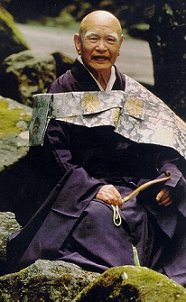
Mesterem rámruházott saját használt nyári csuhája (koromo), indigókék finom kendervászonból (Terebess Gábor)
Indigo koromo of fine hemp given by Kojun Noiri roshi to his disciple, G. Terebess
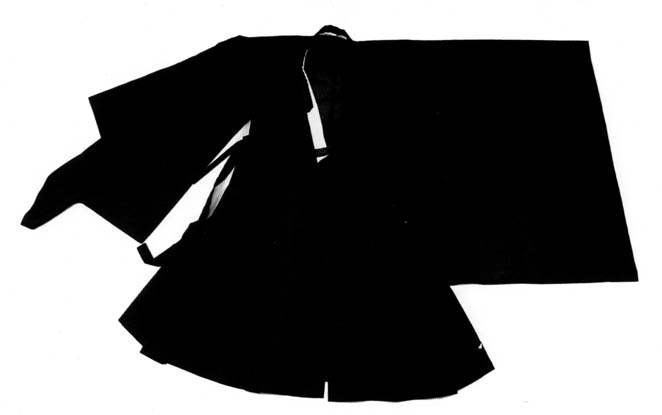
Vékony, nyári szerzetes köntös
Summer koromo, made from a transparent chiffon-like polyester fabric (black poly gauze), traditionally made from silk.
作務衣 samue
Working or everyday clothes for a male Zen Buddhist monk
Munkaruha
About Jinbei & Samue
The 甚平 Jinbei, sometimes called "引っ張り Hippari", is a traditional Japanese garment, originally worn by males, but now sometimes worn by women. Originally considered a home-wear the Jinbei became very popular in the hot and wet Japanese summer due to its very light and airy characteristics. The Jinbei is also widely worn during popular festivities such as matsuri (festivals) or hanabi (fireworks). Generally made of linen and / or cotton, it consists of a pair of shorts tied with a cord and a jacket with short sleeves (sleeves are attached using linen thread to let air flow). Although there are many variations, traditionally, Jinbei is colored with a more or less intense blue. Jinbei is worn without a belt.
The Samue is a garment which has many uses. Traditionally worn by monks in Zen Buddhist temples, artists, or doctors, it is also widely worn as home-wear, both at home and inside Ryokan (traditional hotel), or at Onsen (hot springs). It is also found among Shakuhachi (traditional flute) players. In recent years, the wearing of Samue extended outside the home as a particularly comfortable informal clothing. Just like Jinbei, Samue is worn without a belt.
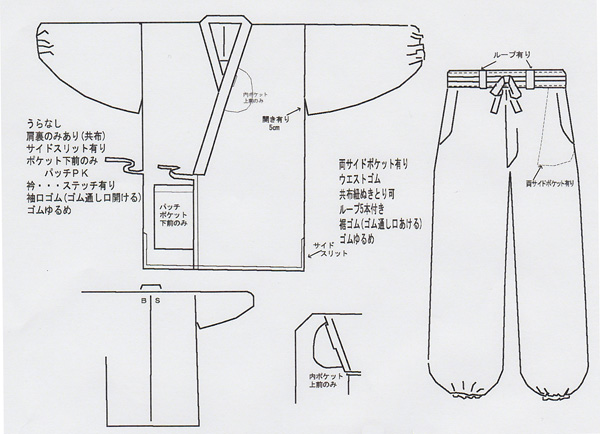
A workoutfit with elastic cuffs at the wrists and ankles.
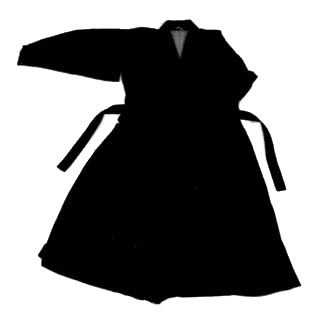
長作務衣 nagasamue Traditional long monks traveling work robe with gathered sleeves. Has the traditional 5 box pleats. Can be worn over kimono or samuegi.
袈裟 kesa
kaṣāya
七條袈裟 [shichijō kesa] /seven-piece robe/
A rectangular ceremonial vestment that is worn draped over the left shoulder by Buddhist monks in East Asia and is emblematic of the robes originally worn by Buddhist monks in India. All kesas are pieced robes (kassetsue 割截衣), made with five, seven, nine, or more panels of cloth that are sewn together. The panels themselves comprise both long and short pieces of cloth. The word kesa originated as a Chinese transliteration of the Sanskrit kaṣāya or "ochre," an earthy pigment containing ferric oxide that varies from light yellow to brown or red. Buddhist monks in India were originally supposed to wear robes made from discarded cloth that was ritually polluted or literally filthy. The procedure was to cut out usable pieces of cloth, wash them, sew them together, and dye the resulting garment with ochre. From that uniform color, Buddhist patchwork robes in general came to be called kaṣāya. As the monastic institution evolved, new cloth for robes came to be provided by lay donors, but the practice of cutting the cloth into small pieces and sewing those together to make robes was retained. Buddhist monks in India were allowed three types of kaṣāya: (1) an antarvāsa or "under robe," (2) an uttarāsangha or "upper robe," and (3) a saghāi or "full dress robe." In the colder climates of Central Asia and China, however, the Indian mode of dress was often insufficient, so monks from those regions wore their native clothing and draped the Indian upper robe or full dress robe on top of that. In China, the word kaṣāya was transliterated as jiasha 袈裟, which is pronounced kesa in Japanese. Worn over a Chinese-style full-length sleeved robe that was tied at the waist with a belt or sash, the jiasha (kesa) lost its function as a practical piece of clothing to cover and protect the body but retained its meaning as an emblem of membership in the monastic order. As vestments used only when formally dressed for solemn Buddhist observances, there was a tendency for jiasha to evolve into finery, crafted from pieces of colorful brocaded silk. Soto monks today receive three kesas upon their ordination.
Verse for Donning Kesa (Takkesa no ge 搭袈裟の偈)
How great the vestment of liberation,
robe that is a signless field of merit.
Wrapping ourselves in the Tathagata's teachings,
we encompass and deliver all living beings.dai sai gedap-puku 大哉解脱服
musō fuku den'e 無相福田衣
hibu nyorai kyo 披奉如來教
kōdo shoshu jo 廣度諸衆生The "vestment of liberation" (gedappaku 解脱服) is the kesa, the vestment (fuku 服) that is emblematic of Buddhist monk-hood, renunciation of attachments, and the path to "liberation" (gedatsu 解脱). The kesa, of course, is a visible sign of membership in the monastic sangha, which is a "field of merit" (fukuden 福田) because gifts made to it result in much merit for the giver, just as seeds planted in fertile field yield a bountiful crop. Nevertheless, the kesa or "robe" (e 衣) is called "signless" (musō 無相) because the liberation that it is symbolic of is not something that can be identified by any external marks (sō 相, S. nimitta). To don the kesa is to figuratively "wrap oneself" (hibu 披奉) in the "Tathāgata's teachings" (nyorai kyō 如來教). Because the two main functions of clothing are the practical one of protecting the person and the social one of signaling identity and status, this line has a double meaning: (1) to publicly identify oneself as a Buddhist monk by donning the kesa, and (2) to gain personal comfort and protection by accepting the Buddha's teachings. The goal of the Mahayana bodhisattva , however, is not simply to attain liberation (nirvana) for oneself alone, but to "deliver" ( do 度) "all living beings" (sho shujō 諸衆生). Thus the suggestion that when donning the vestment of liberation and wrapping oneself in the Buddha's teachings, one should spread that figurative robe so broadly (kō 廣) as to "encompass" all others as well.
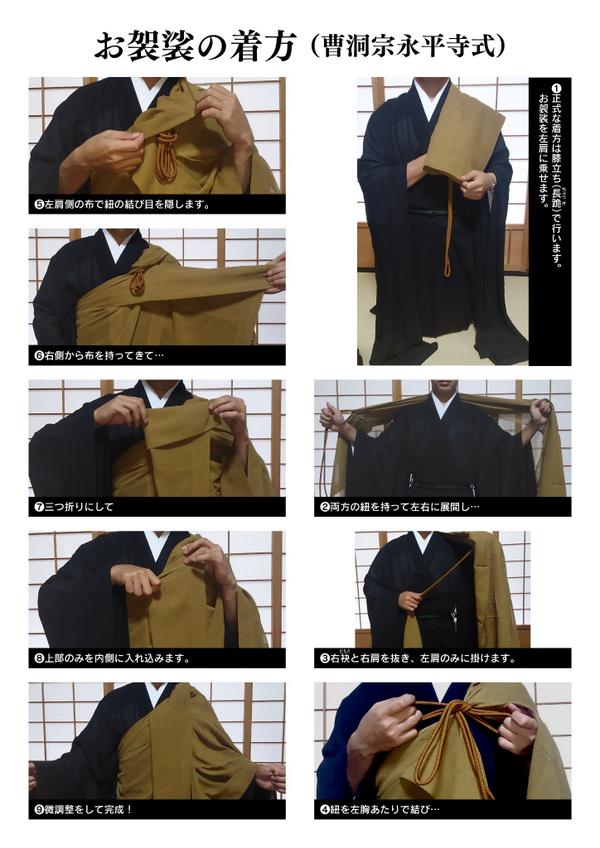
袈裟各部の名称 Kesa names
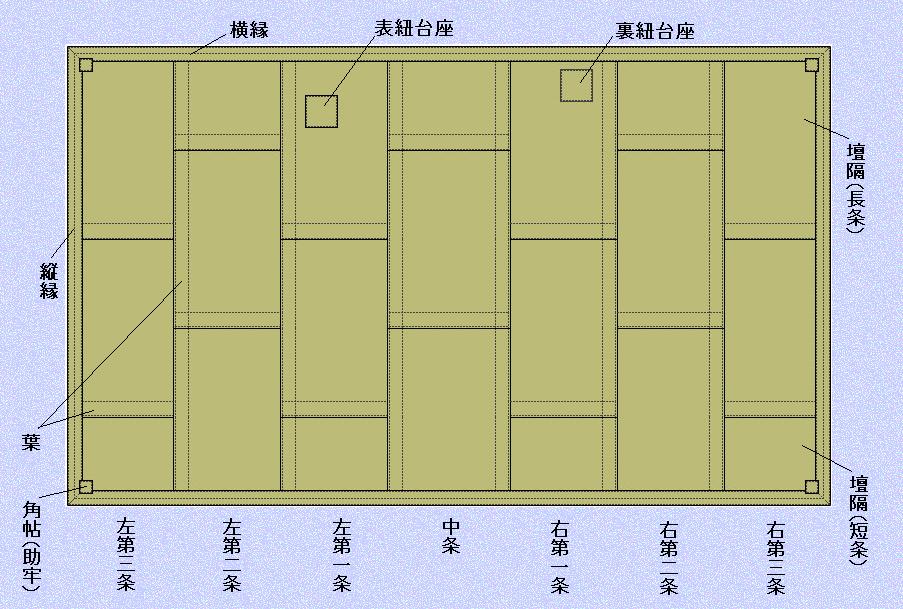
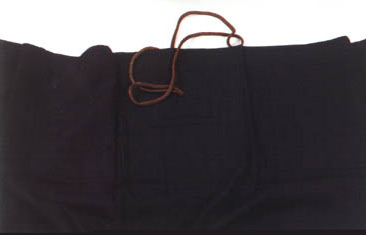

O-kesa (a bal vállon hordott szerzetes felső lepel)

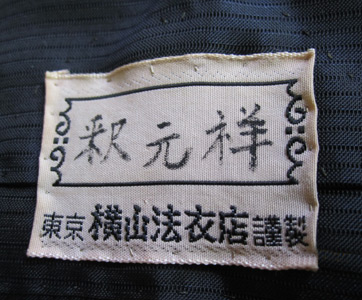
O-kesa, kinagyított végtelenboggal (végtelen csomó, szerencsebog)
Endless knot (Sanskrit : shrivatsa, kínai: panzhang)
és Terebess Gábor japán szerzetes-nevével (釈 元祥 Shaku Genshō)
Not just a garment, the kesa itself is zazen. It is the robe of zazen and the robe of true Zen practice. Since the time of Shakyamuni, all of the masters of the transmission received, respected, wore, taught and passed on the kesa. Like zazen, it is nothing mysterious or mystical, but a natural part of our daily practice.
Some might say the kesa is not really important: "It's a formalism, unnecessary, zazen alone is enough, I don't need to wear it." And of course someone can do zazen without a kesa, it is not absolutely necessary. But without the kesa, zazen becomes only a method of body-mind training, not a true religion. For those who seek the Way, the kesa has a great value.
Wearing the kesa and doing zazen, unconsciously, naturally, automatically, we can receive the great merits of the true Way. Anyone can wear the kesa, and whether it be the grand kesa or the rakusu (mini-kesa), the merits are the same. It protects us as it protects the Way itself.
Traditionally the kesa (funzo e) was sewn from rags that were useless to the social world. It is a symbol of how the worst can become the highest, through kesa, through zazen.
The kesa is most importantly worn for zazen. And whenever possible, if you have one, wear the grand kesa in zazen, rather than the rakusu (especially during sesshin).
The rakusu may also be worn for zazen. But just as Zen practice is not limited to the dojo, neither is the kesa. During the day it should be worn as often as possible, so that the practice of the Way is always present in our minds. The rakusu is especially worn during samu, during sesshin, and when travelling. When we take off our rakusu, it is to protect it. It is taken off when eating (except during sesshin), when going to the bathroom, at parties and for doing samu that might dirty or damage the rakusu. But when travelling, you may keep it on throughout the journey.
"The kesa is the heart of Zen, the marrow of its bones." Eihei Dogen
The kesa is not a decoration or an accessory to our practice. It is, with zazen, the essence of the transmission, the essence of our practice. So the respects we pay to the kesa are not mere formalisms, but representative of the respects we pay to all existences.
When putting the kesa on, always place it on the head and chant the Kesa Sutra to yourself three times, (as we chant it in the dojo with the others each morning). When putting it on, taking it off, folding or unfolding it, concentrate completely on the correct gestures. Keep it in its envelope in a respected place in your room or in the dojo.
Use the zagu for sampai when wearing the grand kesa. Keep it ironed and clean (washing when necessary by the transmitted method). And the kesa never carelessly touches the ground.
____________________
Sewing the Kesa:
In the same way that the rakusu points follow one another to form a straight line, our concentration here and now on each one of our actions forms a line , straight and true, through our life.
"If we sew the kesa without studying the correct method, there will not be correct transmission." Dogen
If possible, everyone should sew a rakusu or a grand kesa. Following the true transmitted method, in practice with the sangha. You can sew one for yourself, for the Temple, or for another. It is the highest gift you can give.
The color of the kesa is kasaya (broken color). It has a color, put not a limited color. Black or dark brown for bodhisattvas, and monks, lighter color for nine-band kesa and other colors and lighter colors for master's kesa. One can use any material, so long as it is chosen without attachment.
We respect the kesa in progress as we respect the finished kesa we wear. From the moment you have chosen the fabric, do not let the material touch the ground. Keep it neatly folded in a clean, high place when you are not working on it. And respect the sewing room as a dojo.
And most importantly, concentrate completely on each stitch and each measurement. Though formless, the kesa has an rigorous form. The attitude of mind is i shin i pai: One stitch, one pai.
"The point should be as small as possible, but it is not necessary that it become a decoration. What is important is that you sew it yourself, whether it's good or bad is not the issue" Kodo Sawaki
__________________
Faith in the kesa.
In Zen, we have faith in the kesa. Though material, the kesa is infinite. All the masters of the transmission totally respected the kesa.
The authentic transmission of the kesa is more important and tells us more about the dharma that all explication of sutras. We should never forget this.
"The kesa is the thread of Zen." Dogen
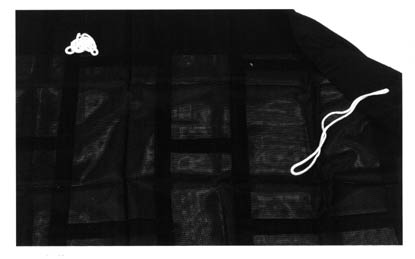
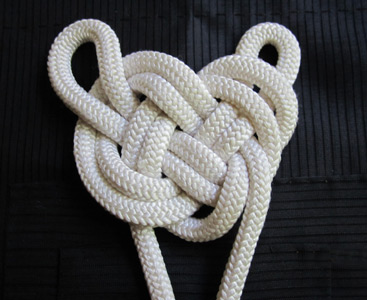
O-kesa, kinagyított boggal
三衣 san'e
three robes
three robes (san'e 三衣)
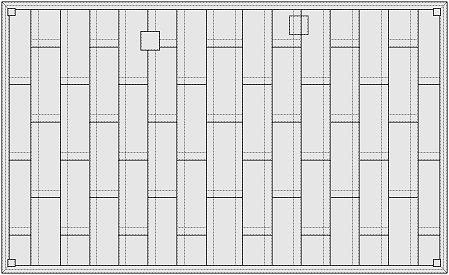
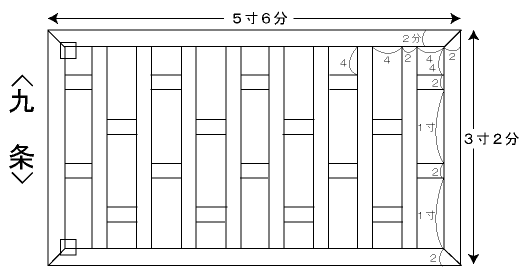
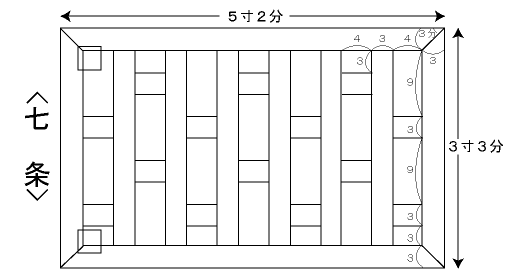
Three types of kesa Soto monks are supposed to receive upon ordination: (1) the five-panel robe (gojōe 五條衣), a.k.a. andae robe (andae 安陀會, S. antarvāsa ), (2) seven-panel robe (shichijōe 七條衣), a.k.a. uttarasō robe (uttarasō 欝多羅僧, S. uttarāsangha), and (3) nine-panel robe (kujōe 九條衣), a.k.a. sōgyari robe (sōgyari 僧伽梨, S. saghāi).
According to Indian Vinaya texts translated into Chinese, Buddhist monks are allowed three types of robes : (1) an antarvāsa or "under robe," (2) an uttarāsangha or "upper robe," and (3) a saghāi or "full dress robe." These three types of robes are symbolically represented by the three types of kesas that Soto monks receive today, but the latter do not have the same shapes or practical functions as the original Indian robes they are named after.
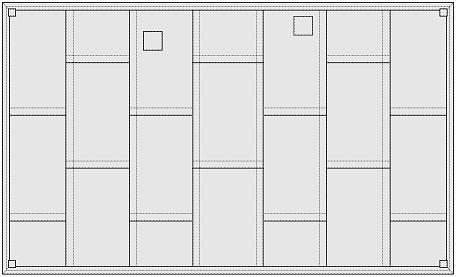
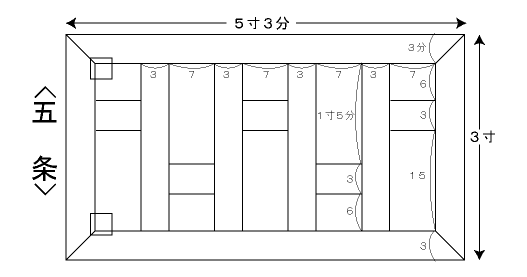
五条衣(現今では絡子)
七条衣
九条衣
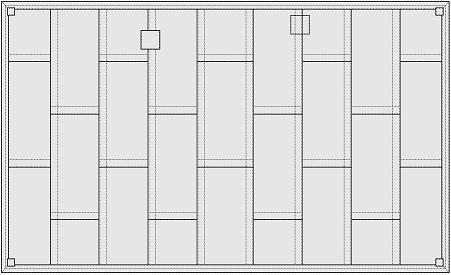
十五条衣
二十五条衣
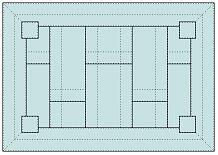
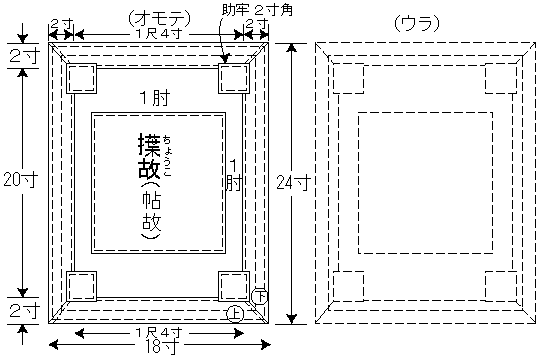
坐具寸法表
注)仏の一磔手=人の2磔手=人の一肘=24指
坐具
帖故
堅
横
堅・横同じ
法服格正
佛の二磔手
佛の一磔手半
佛の一磔手
佛の一磔手=周尺の 2 尺
周尺の 4 尺
周尺の 3 尺
周尺の 2 尺
周尺の 1 尺=曲尺 7 寸 2 分
(曲尺) 2 尺 8 寸 8 分
(曲尺) 2 尺 1 寸 6 分
(曲尺) 1 尺 4 寸 4 分
曲尺 1 尺= 30.3 cm
87.2cm
65.4cm
43.6cm
鯨尺 1 尺= 38 cm
(鯨尺) 2 尺 2 寸 9 分
(鯨) 1 尺 7 寸 2 分
(鯨) 1 尺 1 寸 5 分
佛の一磔手=一肘
2 肘
1.5 肘
1 肘
現行
(鯨) 2 尺 4 寸 91 cm
(鯨) 1 尺 8 寸 68 cm
1 肘 (自肘)
久馬慧忠師
95 cm
75 cm
42×30 cm
小三衣寸法表 縫い方は絡子(帖故)と同じ
袈裟袋・絡子袋の作り 方
https://www.facebook.com/kesa.club
http://www.treeleaf.org/forums/showthread.php?6638-Kesa-OKESA-it-is-about-time%21
http://www.treeleaf.org/forums/showthread.php?6638-Kesa-OKESA-it-is-about-time%21&s=94ab7620aa790ae9e1b746c63263a595
http://www.kogonji.jp/fukudenkai/fukudenkai.html
http://www.kogonji.jp/fukudenkai/11/11.html
http://www10.atpages.jp/nyohoue/index.html
http://www10.atpages.jp/nyohoue/sakusei/index.html
http://www10.atpages.jp/nyohoue/sakusei/saihou_zu/sonota.html
http://www10.atpages.jp/nyohoue/kesa_name/kesa_syurui.html
糞掃衣 funzō-e
Robe made from rags and discarded clothing. According to Buddhist tradition, aspiring acolytes, nuns, and monks were to make their own robes from rags and the discarded clothing of lay people. Such rags were found, washed, and then sewn together in patchwork form. Japan's oldest robe, made in this style, is dated around the 7th or 8th century, and is found at Hōryūji Kennō Hōmotsu 法隆寺献納宝物 in Nara. There are ten types of rags, according to Shunryū Suzuki Rōshi (1904-1971), the Japanese Zen master who founded the San Francisco Zen Center in 1962 and encouraged the teaching of robe-sewing techniques and the giving of the Buddhist precepts to both the monastic and lay communities.
Ten Types of Rags & Discarded Clothing
- Chewed on by an ox
- Scorched by fire
- Soiled by childbirth
- Left at a graveyard
- Discarded by a king's officers
- Gnawed by rats
- Soiled by menstruation
- Offered at a shrine
- Offered in petitional prayer
- Brought back from a Funeral
絡子 rakusu
A simplied version of a kesa that is worn around the neck and falls over one's chest.
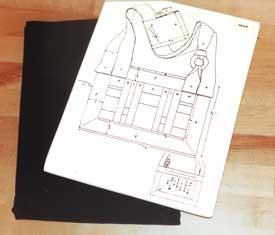
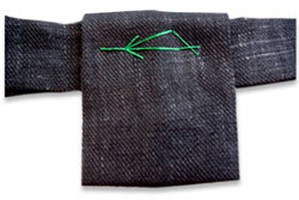
Broken pine needle design on the neck-piece of a rakusu
Szótó stílusú varrat a rakuszu nyakszirti nyelvén: tört fenyőág zöld cérnával
(a Rinzai jele ugyanitt egy hegyet jelképező egyenlőszárú háromszög)
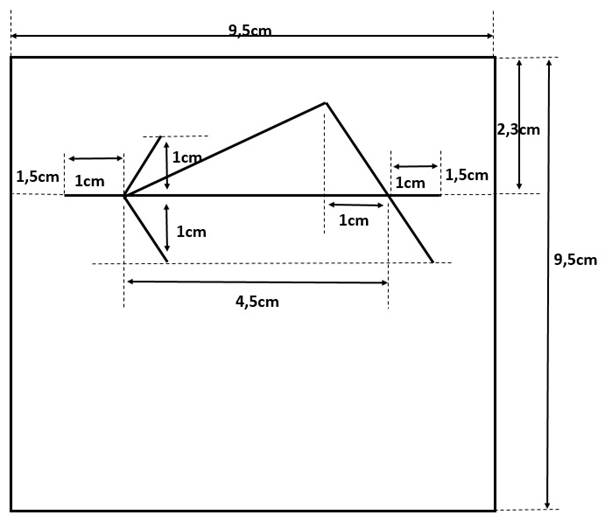
Japanese rakusu have sewn designs on the straps, or on the collar covering, where they fall across the back of the neck to indicate denominational sects: Soto is a broken pine twig, Rinzai is a mountain-shaped triangle, and Obaku is a six-pointed star. In addition, Rinzai and Soto traditions sew a large flat ring on the left strap. This ring is not functional, but recalls the shoulder fasteners of the full-length kesa. As a result of a reform movement known as the fukudenkai in the mid-20th century, some Soto Zen groups have eliminated the rakusu ring.
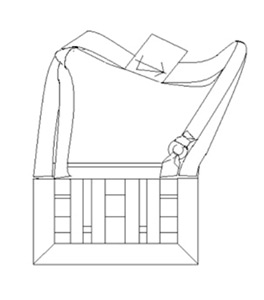
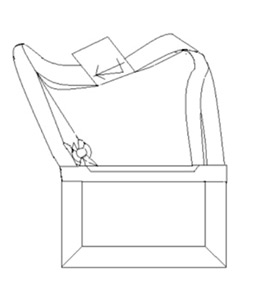
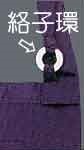 絡子環 rakusu-kan (環 kan = ring, gyűrű); Ring Strap Knot Schematic: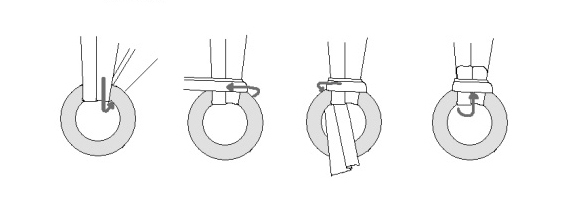
Making Rakusu Rings: http://www.engaged-zen.org/articles/Rings.html
Taking off the bib-style mini-kesa, called rakusu (not "rhaksu"!):
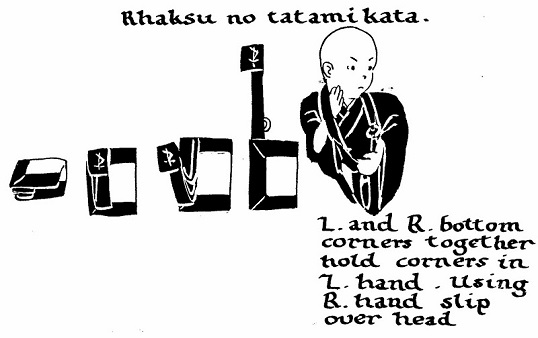

How to fold a rakusu
Publikation von Walter Bruno Brix zur Ausstellung "Kesa - Flickwerk zur Erleuchtung" im Museum der Kulturen, Basel (CH)
http://issuu.com/peerboehm/docs/kesa___flickwerk_zur_erleuchtung___
http://www.kogonji.jp/fukudenkai/3/3.html
PDF: Rakusu > Another version of Rakusu Pattern
PDF: Rakusu Sewing Instructions
Rakusu Sewing Instructions PDF (13 pages)
Rakusu Face PDF (1 page)
Rakusu Frame Worksheet PDF (1 page)
Rakusu Envelope PDF (3 pages)
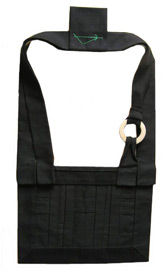
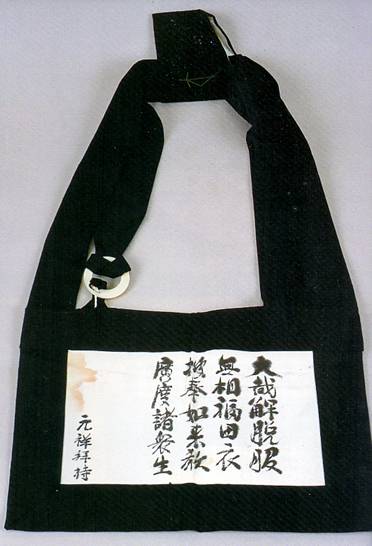
Rakusu: black, natural cotton, with white plastic ring attached on the rakusu strap position (wearer's left breast)
Rakusu (fogadalmi "előke" vagy "mellkendő" eleje és hátoldalának kalligráfiája)
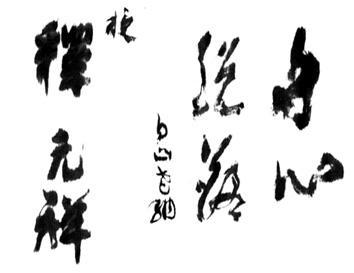
The back inner panel, "white window" of rakusu
身心脱落 Shinjin-datsuraku
“Body and mind dropped off” (Dōgen)
„Test és lélek lehullatott”
Calligraphy by 野圦孝純 Noiri Kōjun (1914-2007), aka 白山老師 Hakusan rōshi, written for 元祥
Genshō (Gabor Terebess)
|
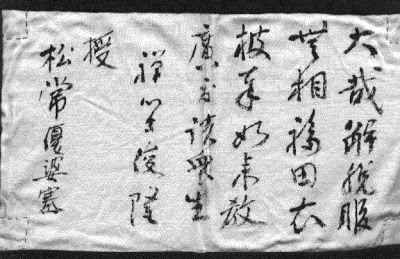
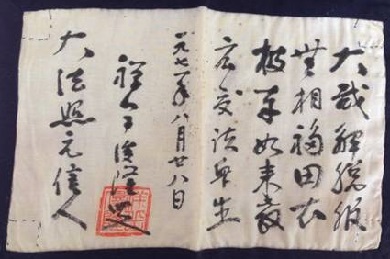
Fogadalmi mellkendők hátlapjai verssel |
搭袈裟偈 大哉解脱服 Takkesa ge Dai sai gedap-puku Robe Chant (1) Verse of the Rakusu (2) This is the robe of freedom Verse of the Kesa (3) How vast is the clothing of liberation Kesa Sutra (4) How great the robe of liberation,
„Tágas a szabadság öltözéke |
大掛絡 ōkuwara / ōkara
like rakusu except larger and worn over the left shoulder
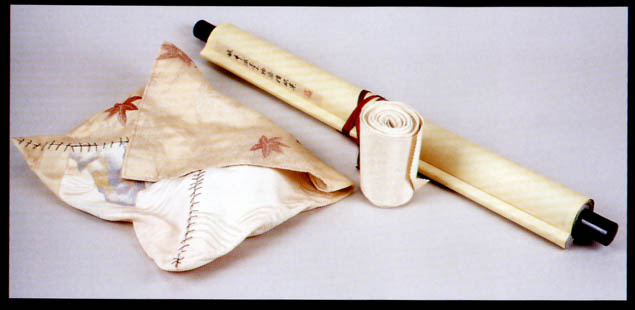
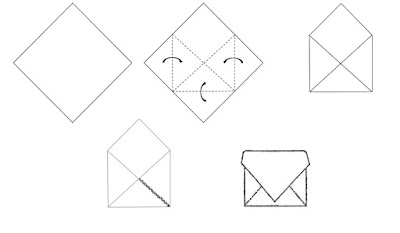
Boríték alakúra varrt rakusu tartó; obi öv; tekercskép
Rakusu pouch in form of envelope (18 x
坐具 zagu
bowing mat
Rongyszőnyeg leboruláshoz
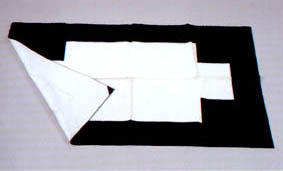
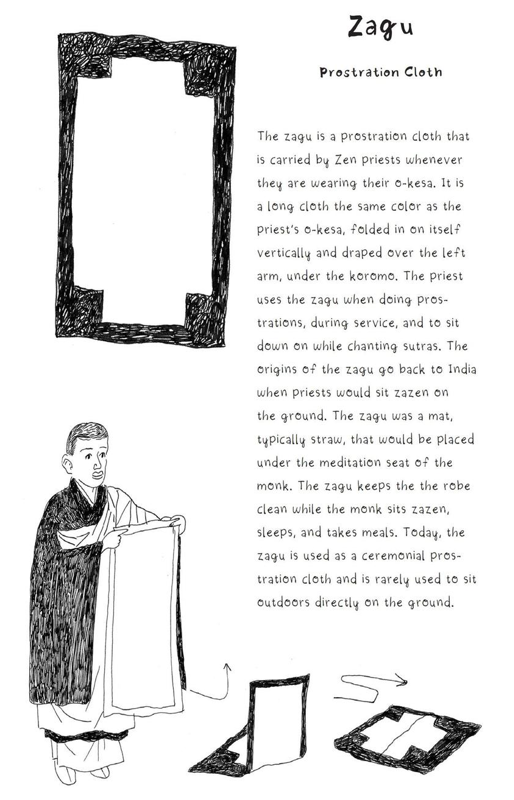
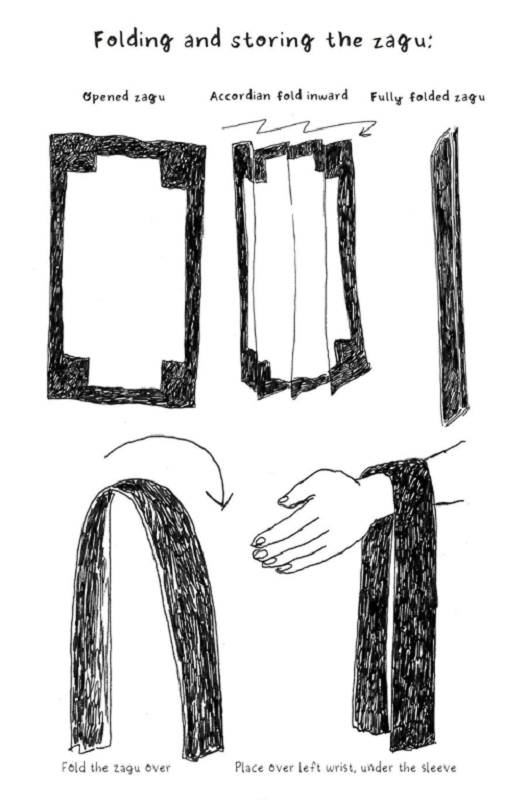
Piece of cloth carried by monk on which bowing is done. (It is crisply folded and worn by the ordained over the left wrist.)
sitting cloth (zagu 坐具, gu 具, nishidan 尼師壇)
S. nisīdana. A rectangular cloth carried by monks and spread out to sit or make prostrations on. Originally a woven straw mat that monks in India used for sitting and sleeping on the ground, to keep away insects and protect their robes. In East Asia the sitting cloth came to have a largely ceremonial, symbolic use, and is rarely if ever laid on the bare ground.
Morceau de tissu, rectangulaire, cousu à la main
servant à la prosternation (sampai). Les manières des
moines Zen doivent ętre délicates et ils doivent veil
ler en particulier que le KESA ne touche pas le sol.
C'est pourquoi le zagou est important pour le zazen et
les sampais. Plus le zagou est déplié, plus c'est une
marque de respect. Quand on fait sampai face au BOUDDA
ou devant les très grands maîtres, on doit le déplié
entièrement. (Maître Deshimaru)
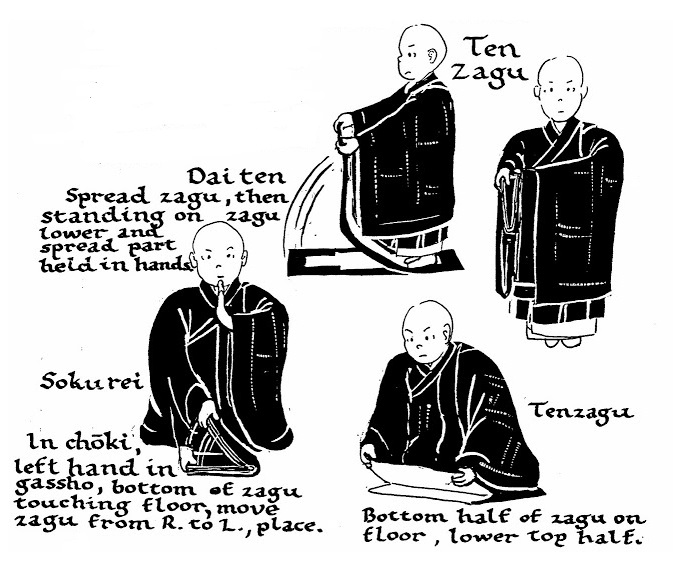


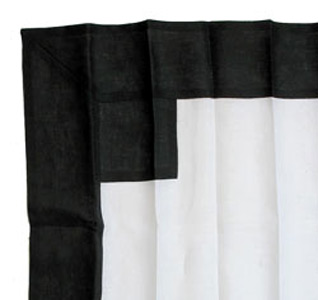
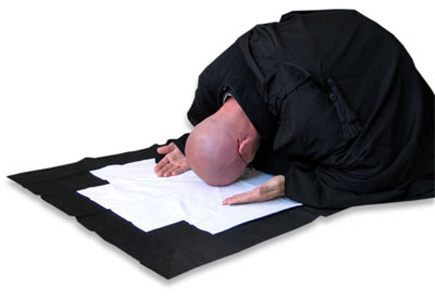
spread sitting cloth (ten zagu 展坐具):
To lay the sitting cloth (zagu 坐具) on the floor in front of one as a place to sit or make prostrations.
下駄 geta
Wooden clogs
Fapapucs (magaslábú sársaru)
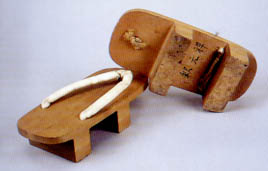
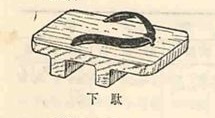
Facipő, császárfa
Wooden clogs, paulownia,
on the bottom: "Shaku Gensho" written by Daigyo Moriyama for G. Terebess
Japanese platform clogs, often worn in rainy weather.
草履 zōri
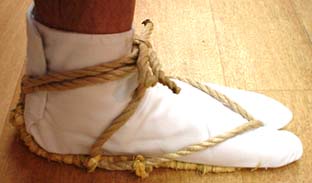
flat and thonged Japanese sandals made of rice straw
Szalmapapucs, gyékénypapucs
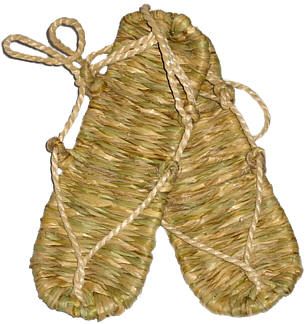
草鞋 waraji
(are straw rope sandals which are mostly worn by monks)
|
|
|
Szalmabocskor, gyékénybocskor, útibocskor
Straw sandals
Waraji were some of the most popular straw-made items used by the general public of Japan. Records of waraji are seen in documents as old as the Heian period (794-1185).
This photo shows straw-made sandals. Long ago, straw-made strings were also attached neatly to lace the feet into the sandals. At one time waraji were used as common footwear in Japan. Waraji only lasted three to four days. Therefore a family of five would need about 500 pairs of waraji per year and kept Japanese farmers busy making waraji from their childhood. This is said to have been the origin of the manual dexterity of the Japanese people.
Japanese people in ancient times would also use waraji as an offering to pray for safety before starting a long journey. Even today, we see large waraji at the entrance of some temples or shrines in Japan, and some people still wish on the traditional waraji as they offer them to a temple or shrine.
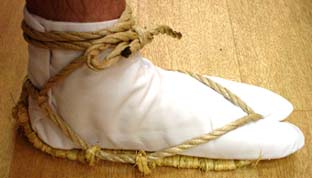
足袋 tabi
split-toe ankle socks
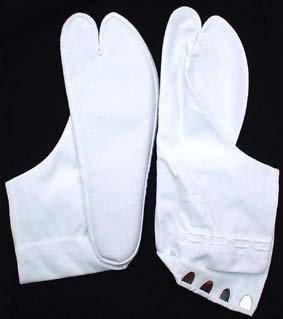

Kétujjas vászon bokazokni

襪子 (べっす) bessu
Egyujjas vászon bokazokni
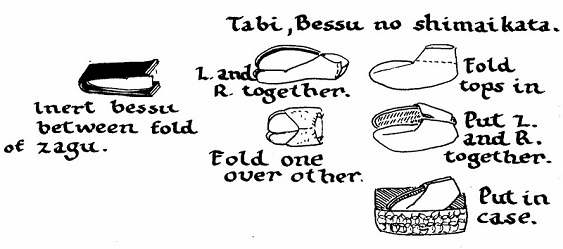
脚半 kyahan
leg protectors
lábszárvédő
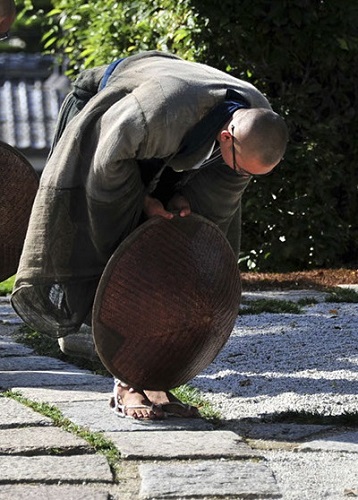
 托鉢笠, 頭台 takuhatsu gasa, atamadai
笠 kasa
網代笠 ajiro-gasa, 托鉢笠 takuhatsu gasa
big basket hat (waterproofed and dyed brown with persimmon juice)
bambuszkalap, nádkalap, esőkalap (átm.:
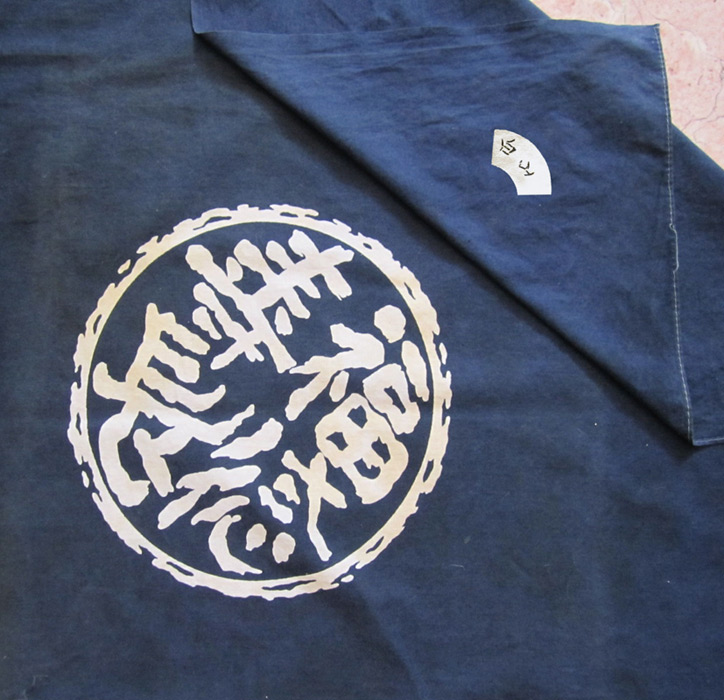
風呂敷 furoshiki
wrapping cloth to store and carry robes
csomagoló kendő, batyukendő > Furoshiki
Mérete: 105 x
pamutvászon, indigókék festés
福德寿長 Jószerencse és hosszú élet. Tulajdonosa (白山 Hakusan) tussal írt nevével.
[Ajándékba kaptam mesterem saját furoshiki kendőjét az összehajtogatott szerzetesruhám tárolására.]
腹巻き haramaki
stomach band
gyapjú haskötő
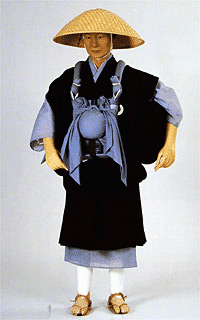
Buddhist monk in a traveling outfit
The style is the form of the Sôtô sect (the form of the Rinzai is slightly different from it).
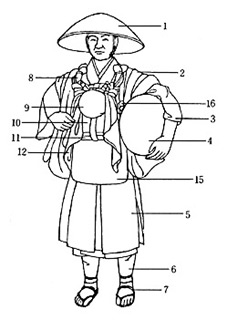
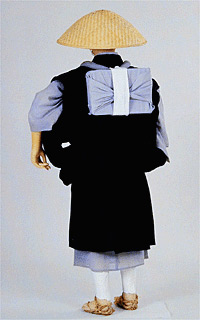

1 網代笠(あじろがさ)Ajiro-gasa
2 墨染(すみぞめ)の直綴(じきとつ)Sumizome-no-jikitotsu
3 小袖(こそで)Kosode
4 坐蒲(ざぶ)Zabu
5 直綴の裳(も)の部分 Jikitotsu-no-mo
6 脚絆(きゃはん)Kyahan
7 草鞋(わらじ)Waraji
8 丸紐(まるひも)Maruhimo
9 應量器(おうりょうき)[浄巾と共に風呂敷で包んでいる]Ohryoki
10 袈裟文庫(けさぶんこ)Kesabunko
11 鉢単(はったん)Hattan
12 風呂敷 Furoshiki
13 後付(あとづ)け行李(こうり)Atozuke-no-kohri
14 手巾(しゅきん)Shukin
15 頭陀袋(ずだぶくろ)Zutabukuro
16 絡子(らくす)[丸く見えるのは絡子の環珮(かんぱい)Rakusu
17 坐蒲につけられた前後の印(しるし)Zabu-ni-tsukerareta-zenngo-no-shirushi
Priest who does the pilgrimage from a country to another just like the cloud which goes empty, or the flowing water may not become settled, so the priest who travels were called "unsui (=cloud and water)"; especially the priest of the Zen sect was called this way. The figure in the photo wears the formal costume for the monk of the Zen sect to practice asceticism travels. He wears a "hitatare" kimono, dyed in ink-black color, and a "maruguke-no-obi (=obi band with the stuffing inside)" band which is called "shukin (=hand cloth)" in ink-black color.: a pair of white "kyahan" leg protectors, "waraji" straw sandals, a "Gojoh-gesa" surplice called "rakusu" on the shoulder. He hungs a "zutabukuro" bag on the chest and a "kesa-fumikura (=surplice book warehouse)" case in front and a "atozuke-kohri" wicker portmanteau backside of the body. He also wears a "ajiro-gasa" hat and has a "zabu" in the left hand. Things like a "kesa" surplice and a "zagu" items are installed in the "kesa-fumikura" case and then they are covered with a "kesa-bunko-fukuro" bag. A set of "ohryohki" bowls and a "johkin (=purity cloth)" is wrapped and fastened to the "furoshi (=bathroom carpet)", a Japanese wrapping cloth. [The "ohryohki" is a set of bowls which a priest uses as tableware. The priest brings also to religious mendicancy, and food is received. It is usually a set of five bowls in pile.]; a black covering paper called "hattan" is inserted into the lower part of them. The rest of the personal effects, such as a "mizu-ita (=water board)" board, a pair of "hashi" chopsticks, a "hashi-bukuro" bag, are wrapped and fastened by a "doh-hatsu-bukuro" bag or a "furoshiki" bag and are hung with a "maru-himo" string. The necessaries for days are installed in the "atozuke-gohri" bag and tied up with the "maru-himo (=round string)" string and are hung in fron and back of the body. The costume style in the photo has not change since the Zen sect introduction; the same costume can be seen on the streets today.

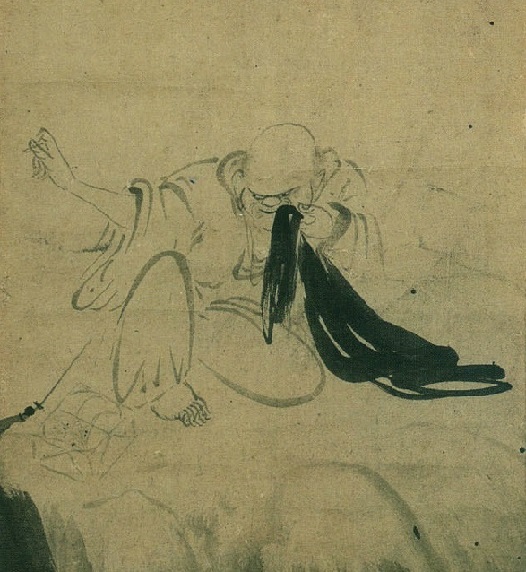
Monk Mending Clothes in the Morning Sun 朝陽圖
Anonymous, traditionally attributed to Muxi (Muqi) Fachang 牧谿法常 (13th century)
Late 13th or early 14th century
Hanging scroll, ink on paper, 84.5 x 30.5 cm
Kyoto National Museum, AK 817
Encomium:
One thread passing through the eye of a needle,
Patches the holes in a tattered garment,
Biting down firmly with one's jaws,
Immediately it is broken.Dongsou Yuankai at Yuji respectfully eulogises.
針孔一絲,破衣補漏。 咬定牙關,當下便斷。
玉几東叟元愷敬贊。
PDF: The Cultural and Religious Significance of Japanese Buddhist Vestments
Dissertation by Diane Riggs
University of California, Los Angeles, 2010. 334 pages
Buddhist literature attributes the origin of monks' robes to the historical Buddha. The robes are thus imbued with the wisdom of the Buddha. Indian monastic codes distinguished between the ascetic practice of wearing robes made from discarded rags picked up from the road, and the monastic practice of wearing robes made from donated cloth. As Buddhism spread, robes were adapted to different cultures, often with minimal reference to monastic codes. The history of this adaptation in Japan, the subject of this research, is revealed by investigating examples of garments, depictions of robes in Buddhist art, and a rich literary tradition about the spiritual power of the robe. The form of both rag robes and monastic robes changed in East Asia. Robes sewn from colorful pieces of fabric imitated robes made of discarded rags. In Japan, such robes were used in rituals for the preservation of the state, given as gifts to the monarch, and preserved at the treasury of the eighth century monarch, Shōmu and other temples. Portraits of eminent Buddhist teachers depict them wearing these multi-colored robes. The monastic robe also changed as Buddhist clerics at court were required to wear robes in the color of their court rank rather than the subdued colors prescribed by monastic codes. Seventeenth century reformers attempted to reshape Japanese Buddhist robes to fit the prescriptions of ancient monastic codes. The Shingon Buddhist teacher, Jiun Onkō, supplemented this kind of textual study by examining art and ancient robes. He taught his followers to make monastic robes according to the codes, and robes that he identified as "rag robes," using the ancient multi-colored pieced robes preserved in Japan as a model. The monastic and rag robes made by Jiun's followers inspired the twentieth century Sōtō Zen priest, Sawaki Kōdō, to popularize sewing robes. Following the teachings of Dōgen, the founder of Sōtō Zen, Sawaki encouraged lay and ordained men and women to sew and wear their own robes as a return to fundamental Buddhist practice, an approach at odds with the customs of Sōtō Zen. The interdisciplinary approach of this dissertation reveals the dynamic interplay between text, art, and textiles that created a vibrant material culture of Japanese Buddhist vestments.
PDF: 福田会 Fukudenkai: Sewing the Buddha's Robe in Contemporary Japanese Buddhist Practice
by Diane E. Riggs
Japanese Journal of Religious Studies
Vol. 31, No. 2, Traditional Buddhism in Contemporary Japan (2004), pp. 311-356
(article consists of 46 pages)
This paper discusses twentieth-century Buddhist robe study and sewing groups called fukudenkai that were established after World War II by the Sōtō Zen priest and scholar Sawaki Kōdō (1898-1965) and his disciples. The term fukudenkai refers to a metaphor of spiritual efficacy (a field of merit) that the robe embodies, and many participants believe that the act of sewing the robe in a context of meditation and formal Zen practice produces merit. Sawaki's promotion of faith in the Buddhist robe as equivalent to faith in the Buddhist teaching is based on two essays by Dōgen (1200-1253), who is revered as the founder of the Japanese Sōtō Zen lineage. In addition to Sōtō commentaries on Dōgen's essays, Sawaki also made use of the texts and practical robe sewing techniques developed by the pioneering Shingon scholar, Jiun Ōnkō (1718-1804). The form and materials of fukudenkai robes are quite different from the modern forms established by the Sōtō administrative office, whose regulations guide commercial robe makers. Fukudenkai groups thus provide an alternative to the centrally controlled commercial culture of robe making in contemporary Japan.
PDF: Robes of Rags (糞掃衣 funzōe) and Silk in the Edo Period:
面山瑞方 Menzan Zuihō (1683-1769) and 上田照遍 Ueda Shōhen (1828-1907) Interpret the Practice of the Buddhist Robe
by Diane E. Riggs
Journal of Indian and Buddhist Studies (Indogaku Bukkyō gaku kenkyū), (March 2007)
Volume 55. Issue 3, pp 1161-1166.
Materials appropriate for Buddhist robes: Two Edo period interpreters of the Rag robe (funzōe) and Daoxuan's prohibition of silk robes.
PDF: “The Buddhist Robe According to the Teaching: Nyohōe, Nōe and Funzōe”.
by Riggs, Diane (2007). Bulletin of Buddhist Cultural Institute, Ryukoku University, 46, pp. 87-97.
Table of contents
I. The concept of Nyohoe* (87)
Il. Three Paradigms of the Buddhist Robe (89)
III. Negotiating between the three Paradigms (92)
Conclusion (94)
Notes (95)
Abbreviation(97)
Bibliography(97)*Nyohōe 如法衣, Nōe 納衣/衲衣 and 糞掃衣 Funzōe
PDF: Interpreting the Material Heritage of the
'Elephant Trunk Robe' in Soto Zen
by Diane E. Riggs
(2015), pp. 235-259.
PDF: Study of the Okesa, Nyohō-e: Buddha's Robe
by Tomoe Katagiri
1986 & 2000
[nyohō-e 如法衣]
PDF: The Buddhist Kesa: Clothes of Enlightenment
by Oswin Hollenbeck, Prior, Eugene Buddhist Priory
http://www.shastaabbey.org/about-vestments.html
Quand l'habit fait le moine: The Symbolism of the kāsāya in Sōtō zen
Cahiers d'Extrême-Asie, 1995/8, pp. 335-369
https://www.persee.fr/doc/asie_0766-1177_1995_num_8_1_1101
https://www.academia.edu/10033938/Quand_lhabit_fait_le_moine_The_symbolism_of_the_k%C4%81s%C4%81ya_in_S%C5%8Dt%C5%8D_Zen
PDF: The Zen of Rags
by Paula Arai
PDF: Portraying a Japanese Buddhist Monk in the SCA
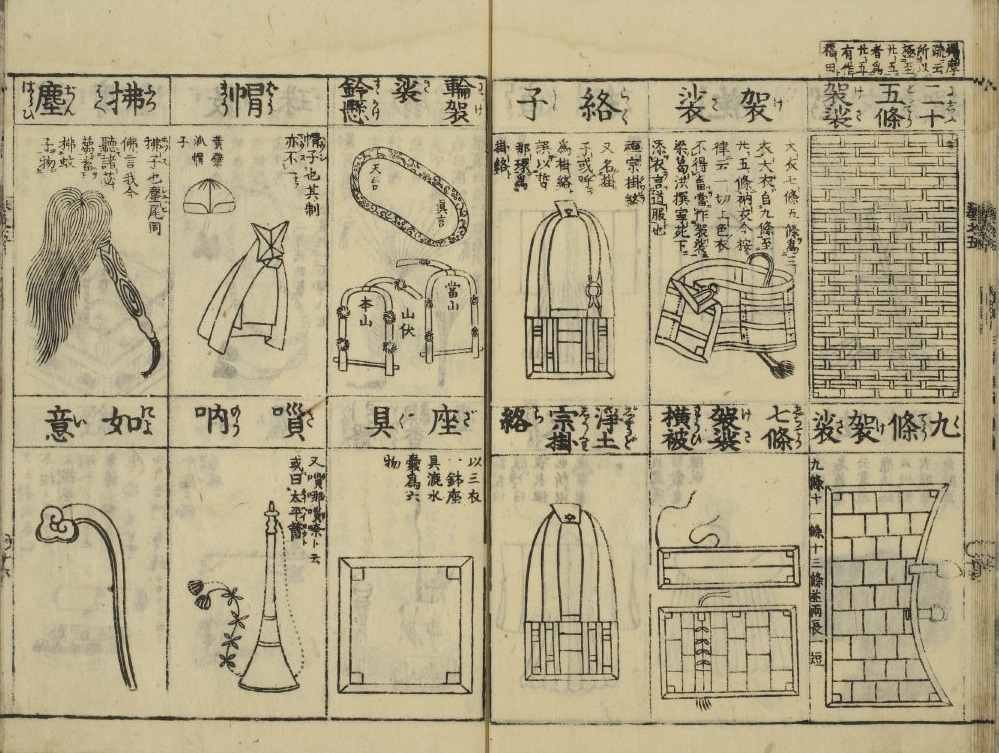
Butsuzō-zu-i 仏像図彙 Collected Illustrations of Buddhist Images. Published in 1690 (Genroku 元禄 3)
PDF: John Kieschnick, “The Symbolism of the Monk's Robe in China”
Asia Major, Third Series, vol.12, no.1 (2000): 9-32.