
Terebess
Asia Online (TAO)
Index
Home
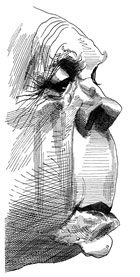
Jorge Luis Borges (1899-1986)




SEVENTEEN HAIKU
Translated by Norman Thomas di Giovanni
In: The New Republic, Vol. 187, no. 17, issue 3,537, p. 30. Washington, 1 November 1982
1
They told me something,
the evening and the mountain.
And now I've lost it.
2
The limitless night
at this moment is nothing
more than a fragrance.
3
This is, isn't it,
the dream I dreamed and forgot
just before daybreak?
4
The chords fade away.
The music intuited
my inner feelings.
5
The almond blossoms
hold no cheer for me today.
They are so like you.
6
In utter darkness
books, pictures, a ring of keys
are bound to my fate.
7
From that day till this
I've not shifted the pieces
across the chessboard.
8
In the wilderness
dawn happens, filling the sky.
Does anyone know?
9
The idle broadsword
goes on dreaming its battles.
I dream something else.
10
The man has passed on.
His beard's unaware of it.
His nails keep growing.
11
Once upon a time
this was the hand that caressed
your flowing tresses.
12
Here beneath these eaves
the mirror shows no image
other than the moon's.
13
Here beneath the moon
the shadow that keeps growing
is one vast shadow.
14
Is it an empire,
this light that is going out—
or a firefly's glow?
15
The new moon on high.
She too is gazing at it
from another door.
16
Distantly, a trill.
The nightingale does not know
that it consoles you.
17
This old hand of mine
goes on setting down verses
for oblivion.
Seventeen
Haiku
Translated by Jon Tarnoc
1
Something
was promised to
me by the afternoon and the
mountain. I have lost it.
2
The
vast night.
Now there's nothing else
but fragrance.
3
Is
there or not
the dream I forgot
before dawn.
4
Silent
strings.
Music had known
my feelings.
5
Wouldn't
greet me now,
the almond trees in the orchard.
They're your memory.
6
Obscurely,
books,
knives, keys
follow my luck.
7
From
that day on
I never moved the pieces
on the chessboard.
8
In
the desert
dawn arrives.
Somebody knows it.
9
The
idle sword
dreams of battles.
I have another dream.
10
The
man's dead.
His beard and nails grow.
They don't know.
11
This
is the hand
that has touched
your head of hair.
12
The
mirror below
the eavesboard reflects
the Moon alone.
13
Under
the Moon
an extended, solitary
shadow.
14
Extinguished
light.
Is it of an empire
or that of a firefly?
15
New
Moon.
Even she's watching
through another door.
16
The
nightingale's far
away trill consoles
me unknowingly.
17
My
aging hand
writing down verses
for oblivion.
SEVENTEEN HAIKU
Translated by Michael Kelleher
1
The afternoon and the mountain
Have told me something.
I have lost it already.
2
The vast night
Is nothing now
But a perfume.
3
Is it or is it not
The dream that I forgot
Before the dawn?
4
The cords are silent.
The music knew
What I feel.
5
Today the almond trees
In the orchard fail to cheer me.
They are your memory.
6
Darkly
Books, sheets, keys
Follow my luck.
7
Since that day
I haven't moved the pieces
On the board.
8
The aurora arrives
In the desert.
Somebody knows it.
9
The idle sword
Dreams of its battles.
I dream of something else.
10
The man is dead.
His beard doesn't know it.
His fingernails are growing.
11
This is the hand
That once touched
Your hair.
12
Beneath the eave
The mirror copies nothing
More than the moon.
13
Beneath the moon
The lengthening shadow
Is all alone.
14
Is that light going out
An empire
Or a firefly?
15
She too watches
The new moon.
From another door.
16
A trilling from afar.
The nightingale doesn't know
It consoles you.
17
The aged hand keeps on
Sketching verses
To forgetfulness.
SEVENTEEN HAIKU
Translated by Chris Gordon
1
Afternoon. The mountain.
What they told me.
Already it's gone.
2
The broad evening.
Nothing more than
a vague fragrance.
3
The dream that faded
just before dawn.
Was it real or not?
4
The strings grow still.
Their sound gives way
To my thoughts.
5
No comfort from
the almonds in the orchard.
They make me think of you.
6
Dimmer, dimmer.
My books, pictures, even keys.
Just like my future.
7
Since that one day
I've been unable to move
the pieces on the board.
8
In the desert
dawn presents herself.
Someone will see it.
9
The indolent sword
rings with its former battles.
My dream is otherwise.
10
He's passed on,
but his chin doesn't realize.
Each hair still growing.
11
My hand.
At times it brought about
Your horseman's capture.
12
Under the balcony
the mirror shows no more
than the moon.
13
Under the moon
the shadow that reaches out
finds itself alone.
14
A hint, this light
that extinguishes itself,
or a firefly?
15
The new moon.
She as well sees
by some other light.
16
Barely a trill.
The nightengale's forgotten
how to console you.
17
My old hand.
The traditional forms
bring it a forgetfulness.
SEVENTEEN HAIKU
Translated by James Honzik
I
It was something they told me,
the lateness of day, and the mountain.
I have already forgotten it.
II
The vast night
isn't anything now
other than a trace.
III
Is this or isn't this,
the dream that I forgot
before dawn.
IV
Silence the strings.
The music knows
how I feel.
V
Today I am not happy.
The almond trees
are your memories.
VI
In the darkness
books, films, and keys
follow my chance.
VII
Since that day
I have not moved the pieces
on the chess board.
VIII
In the desert
it is dawn.
Some one knows.
IX
The sheathed sword
dreams of battles.
I have other dreams.
X
This man has died.
His beard doesn't know this
His fingernails still grow
XI
This is the hand
that once
touched your hair.
XII
Below the eaves
the mirror doesn't reflect
anything more than the moon.
XIII
Below the moon
The shadow grows longer
alone.
XIV
Is that disappearing light
an empire,
or a firefly?
XV
The new moon.
Another look,
another door.
XVI
From far away you hear her song.
The nightingale doesn't know
that she consoles you.
XVII
The old hand
still traces out lines
for the forgotten.
On Salvation by Deeds
One autumn, one of the autumns of time, the Shinto divinities gathered, not for the first time, at Izumo. They are said to have numbered eight million. Being a shy man I would have felt a bit lost among so many. In any case, it is not convenient to deal in inconceivable numbers. Let us say there were eight, since eight is a good omen in these islands.
They were downcast, but did not show it: the visages of divinities are undecipherable kanji. They seated themselves in a circle on the green crest of a hill. They had been observing mankind from their firmament or from a stone or from a snowflake. One of the divinities spoke:
Many days, or centuries, ago, we gathered here to create Japan and the world. The fishes, the seas, the seven colors of the rainbow, the generations of plants and animals have all worked out well. So that men should not be burdened with too many things, we gave them succession, issue, the plural day and the singular night. We also bestowed on them the gift of experimenting with certain variations. The bee continues repeating beehives. But man has imagined devices: the plow, the key, the kaleidoscope. He also imagined the sword and the art of war. He has just imagined an invisible weapon which could put an end to history. Before this senseless deed is done, let us wipe out men.
They remained pensive. Without haste another divinity spoke:
It is true. They have thought up that atrocity, but there is also this something quite different, which fits in the space encompassed by seventeen syllables.
The divinity intoned them. They were in un unknown language, and I could not understand them
The leading divinity delivered a judgment:
Let men survive.
Thus, because of a haiku, the human race was saved.
Izumo, April 27, 1984
Tankas
Translated by Christopher Mulrooney
1
High on the summit
the whole garden is moon,
golden moon.
Preciouser is the rub
of your mouth in the dark.
2
The voice of a bird
the shadows abscond with
has hushed.
You walk your garden.
Something, I know, you miss.
3
The alien goblet,
the sword once a sword
in other hands,
the street moon,
say, not enough?
4
Under the moon
a gold-and-dark tiger
looks at its claws.
Not knowing at dawn
they destroyed someone.
5
Sad the rain
on marble falls,
sad to be earth.
Sad not being days
of men, dream, dawn.
6
Not to have fallen
like the rest of my blood,
in battle.
At night in vain to be
the syllable counter.